Case 008 · Personal work · Reinterpretation
Blue Bird
He never picks up the feather.
An anime opening rebuilt as live action, one frame at a time, for about nine dollars.
The short version
A live action reinterpretation of the third opening of Naruto Shippuden, with me as the only person on screen. No crew, no camera, no location. Thirty nine seconds.
It started as a private thing and stayed one. There is no client and no brief. What makes it worth publishing is not the homage, it is the method underneath it: a piece this specific, made alone, only holds together if identity, framing and description are kept in separate boxes and never allowed to argue with each other.
A reinterpretation, not a copy and not a clip. That distinction is what fixed the piece.
As a copy, every missing shot is a hole. As a reinterpretation, absence becomes a choice, and the two elements that are not in the original stop being random additions and become what this version decided to look at.
01The method
Every generated frame has three inputs, and none of them is allowed to invade the others.
This is the part that took the longest to learn and the part that transfers to any other project. Most failed images fail because one input was asked to do another input's job: the prose was asked to hold the framing, or a loose photograph was asked to hold the identity.
Who the person is
A locked character sheet
Never a loose photograph, never a description
Where the camera is, what enters frame
A clean reference frame
Composition is never written in prose
Wardrobe, light, texture, atmosphere
The written prompt, in English
The only job the text is any good at
Why it holds
Split this way, a bad frame tells you which input to fix. The face drifted, so the sheet was not carrying. The camera is in the wrong place, so the reference was wrong or missing. The jacket reads new instead of worn, so the prose was lazy. Without the split, a bad frame just tells you to try again, which is how you spend an afternoon and twenty attempts learning nothing.
02Identity
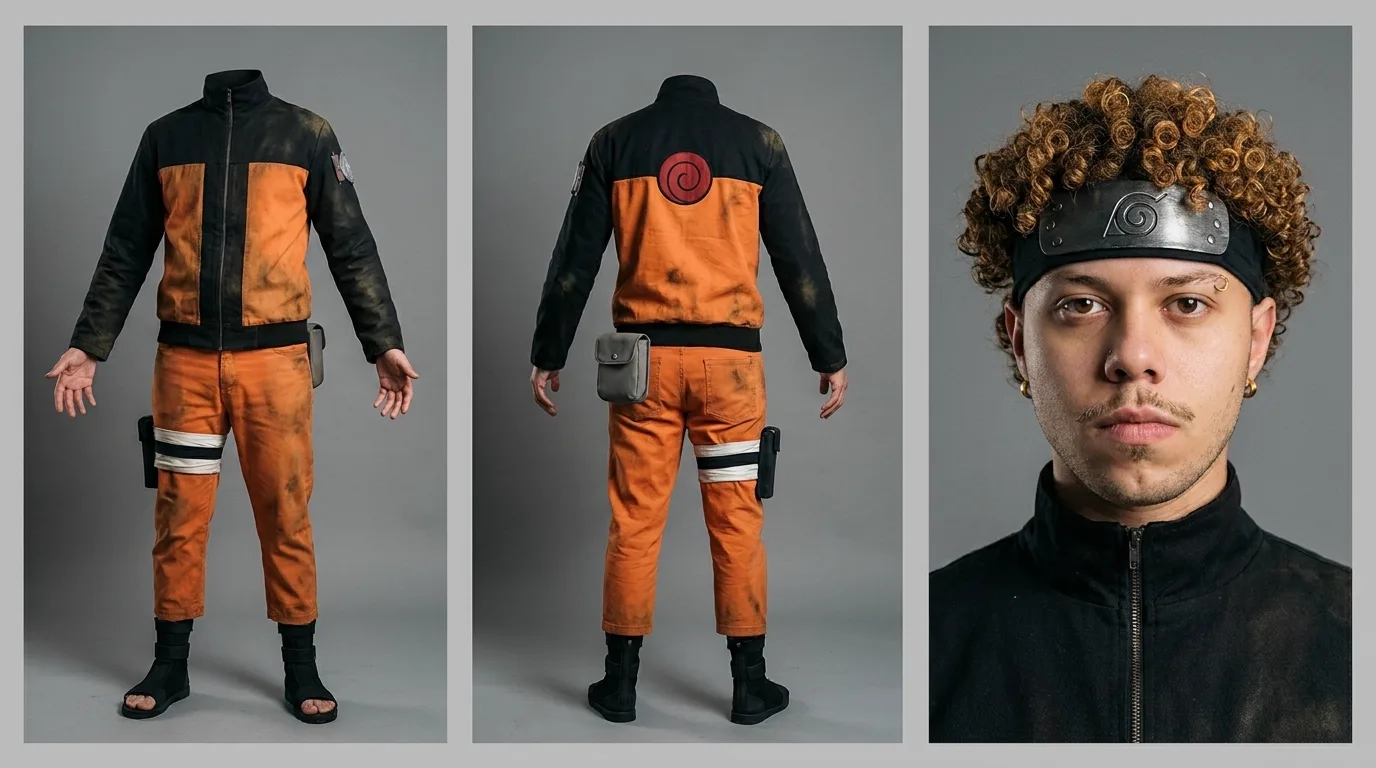
The person is an asset before he is a shot.
Front, three quarters and both profiles, generated once and locked. My own photographs are raw material for building that sheet and never enter a shot as reference. That rule exists because a photograph carries its own lens, its own light and its own day, and all three leak into whatever you attach it to.
Wardrobe
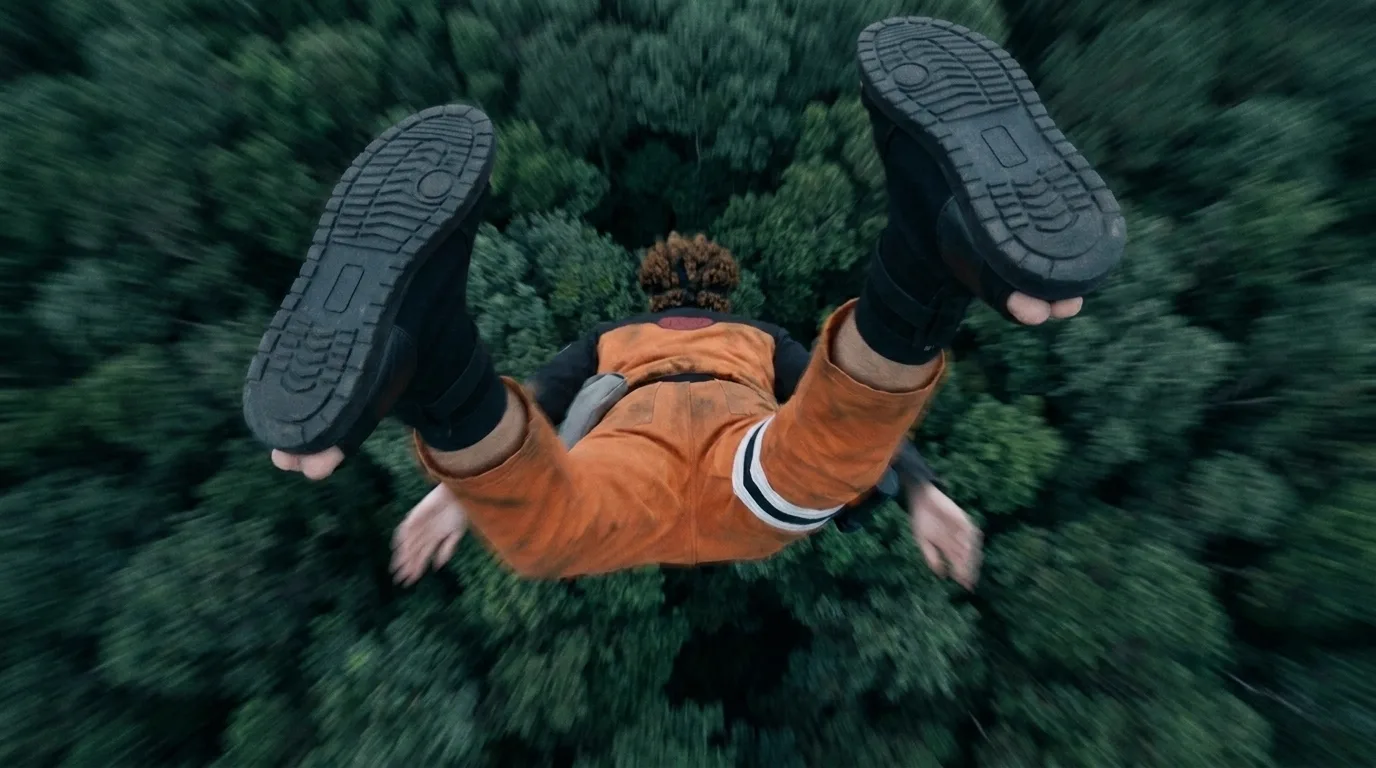
Cinema wardrobe rather than costume: heavy canvas and worn nylon with visible weave, uneven fading at the shoulder, pulled stitching, a frayed cuff, dirt worked into the fold of the collar, and metal that is oxidised and holding a fingerprint. Written once, into the style, so it could not drift between shots.
03The laws
Nine rules, each one answerable yes or no in three seconds, checked before any money is spent.
A law that needs interpretation is a preference. Preferences do not survive the fortieth image of a long session, because by then you are tired and every frame looks acceptable. Binary rules do survive, because they can be checked by something that is not tired.
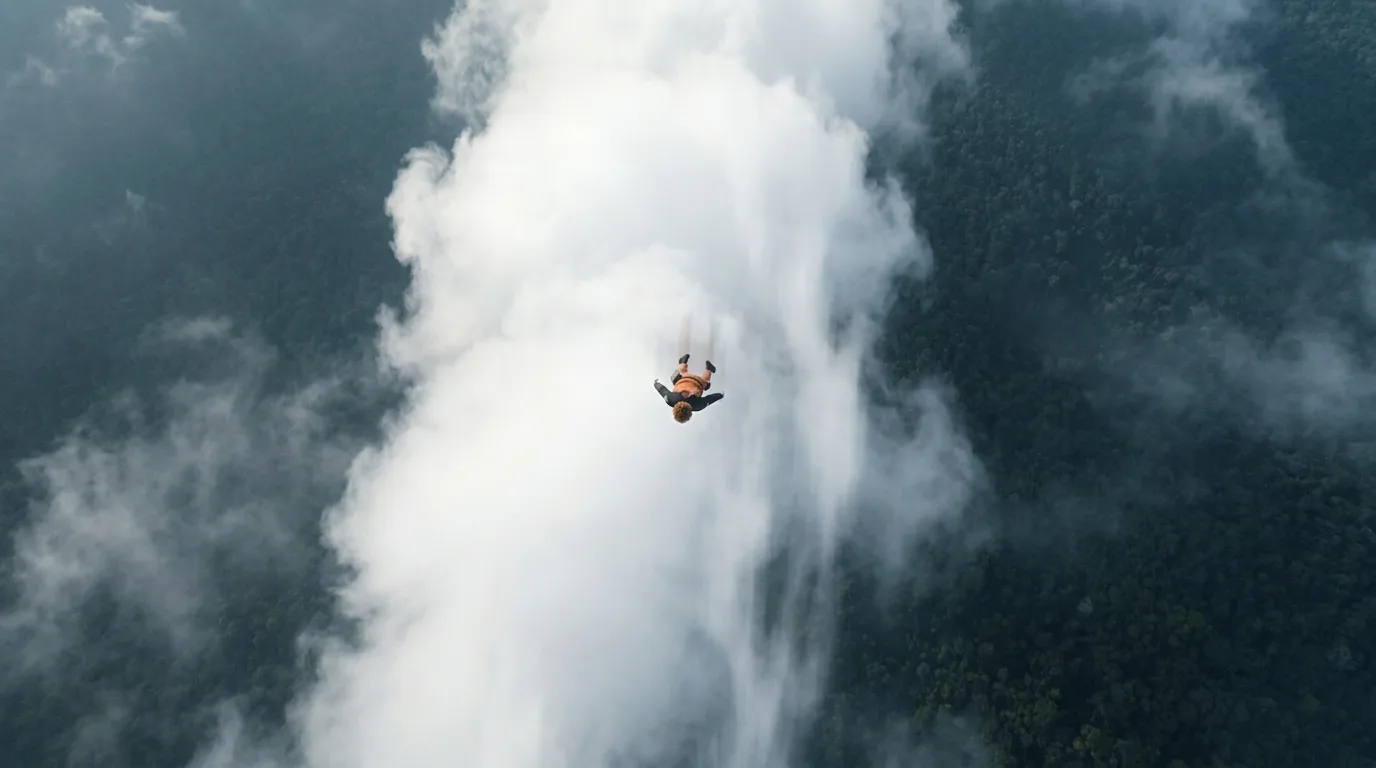
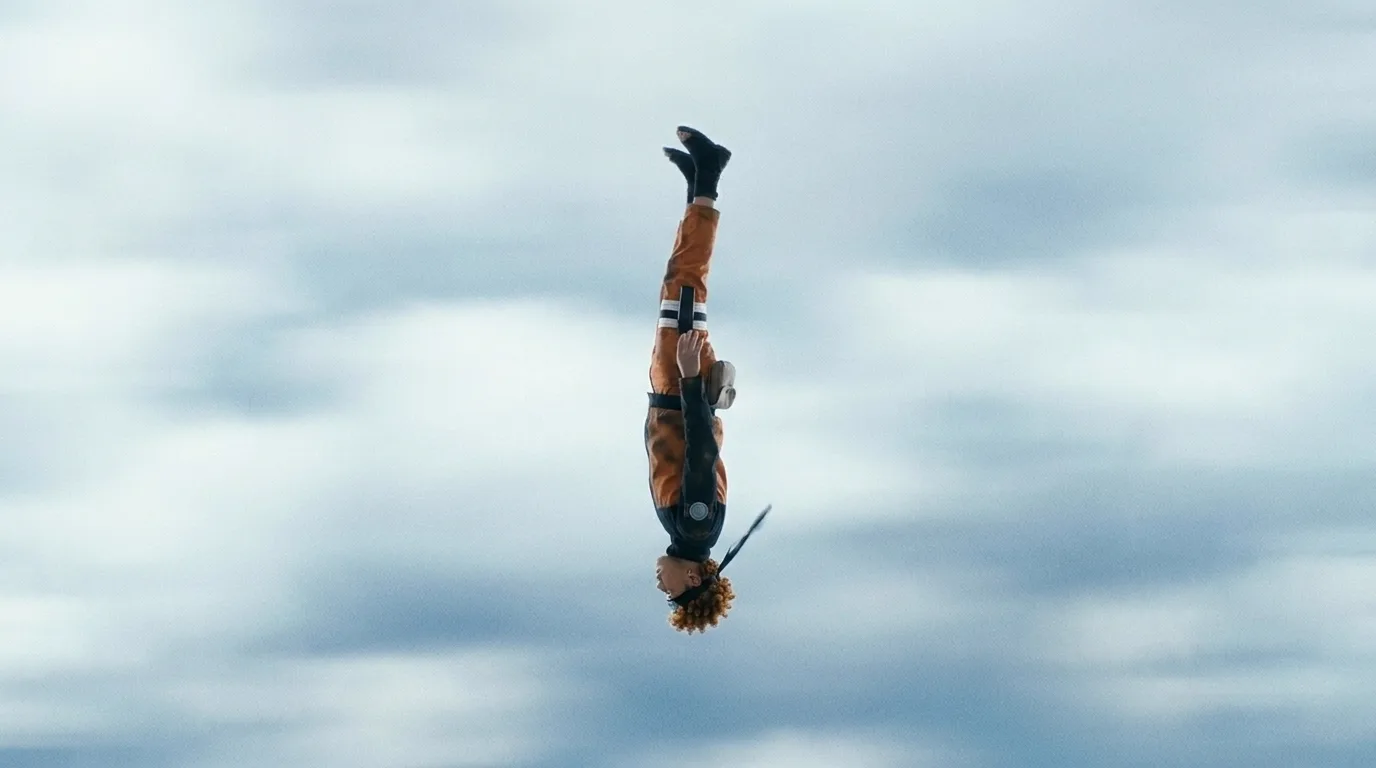
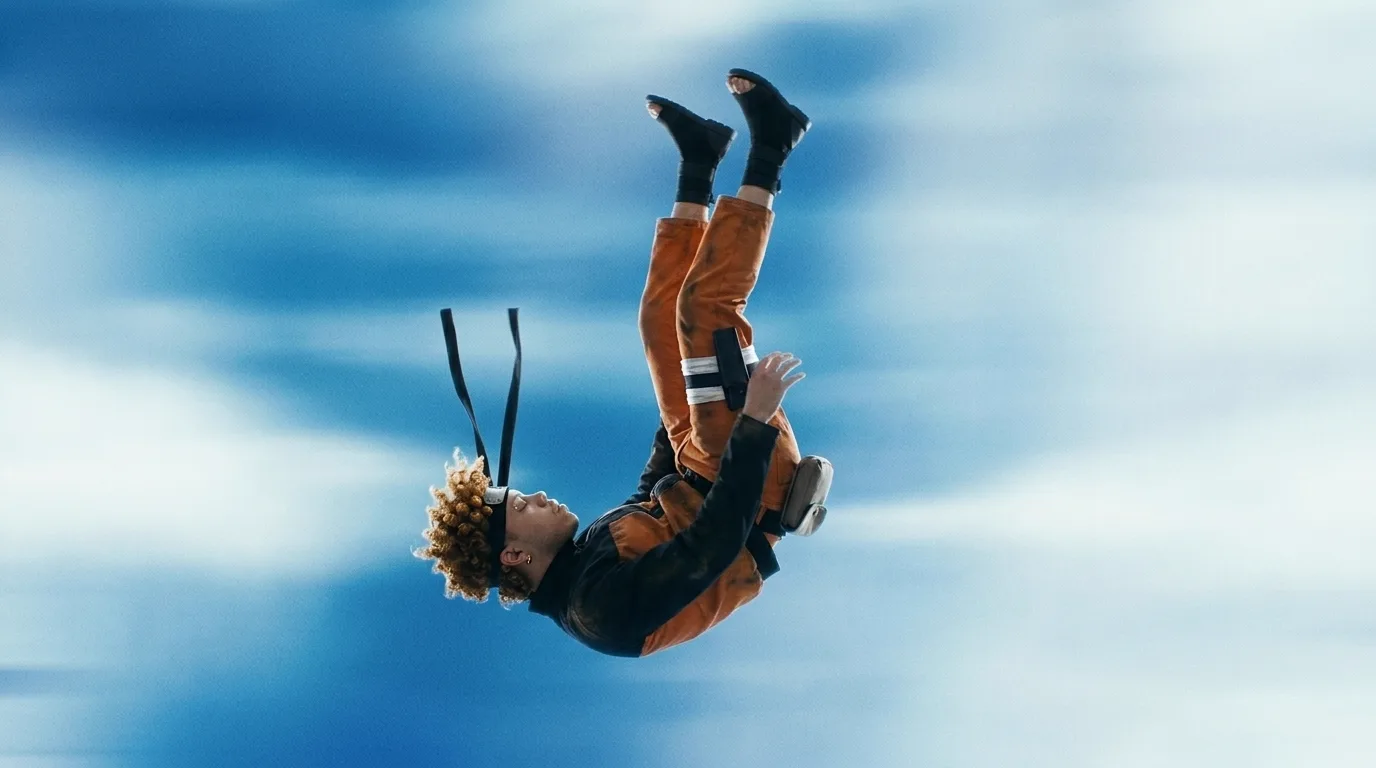
- 01The only warm mass in frame is him. Everything else is blue or white.
- 02Sky behind him and nothing else. No horizon, no ground, no earth.
- 03Hair and fabric pushed upward. This is a fall, not side wind.
- 04A thin gold ring in the left eyebrow, visible whenever that side of the face shows.
- 05No other jewellery anywhere on the body.
- 06The band's metal is scratched, matte and oxidised.
- 07Fabric with visible weave, uneven fading, dirt worked into the folds.
- 08Zero anime linework. Zero flat cel shading.
- 09No fox whisker marks on the face.
The gate
The audit runs before the generator, not after it.
A written prompt is read against the nine laws and rejected by number before anything is generated. It costs nothing to reject a prompt and it costs money to reject an image, so the cheap judgment goes first. Most of the savings on this piece came from prompts that were never run.
04The anchor
One frame cost five attempts, and it is never regenerated.
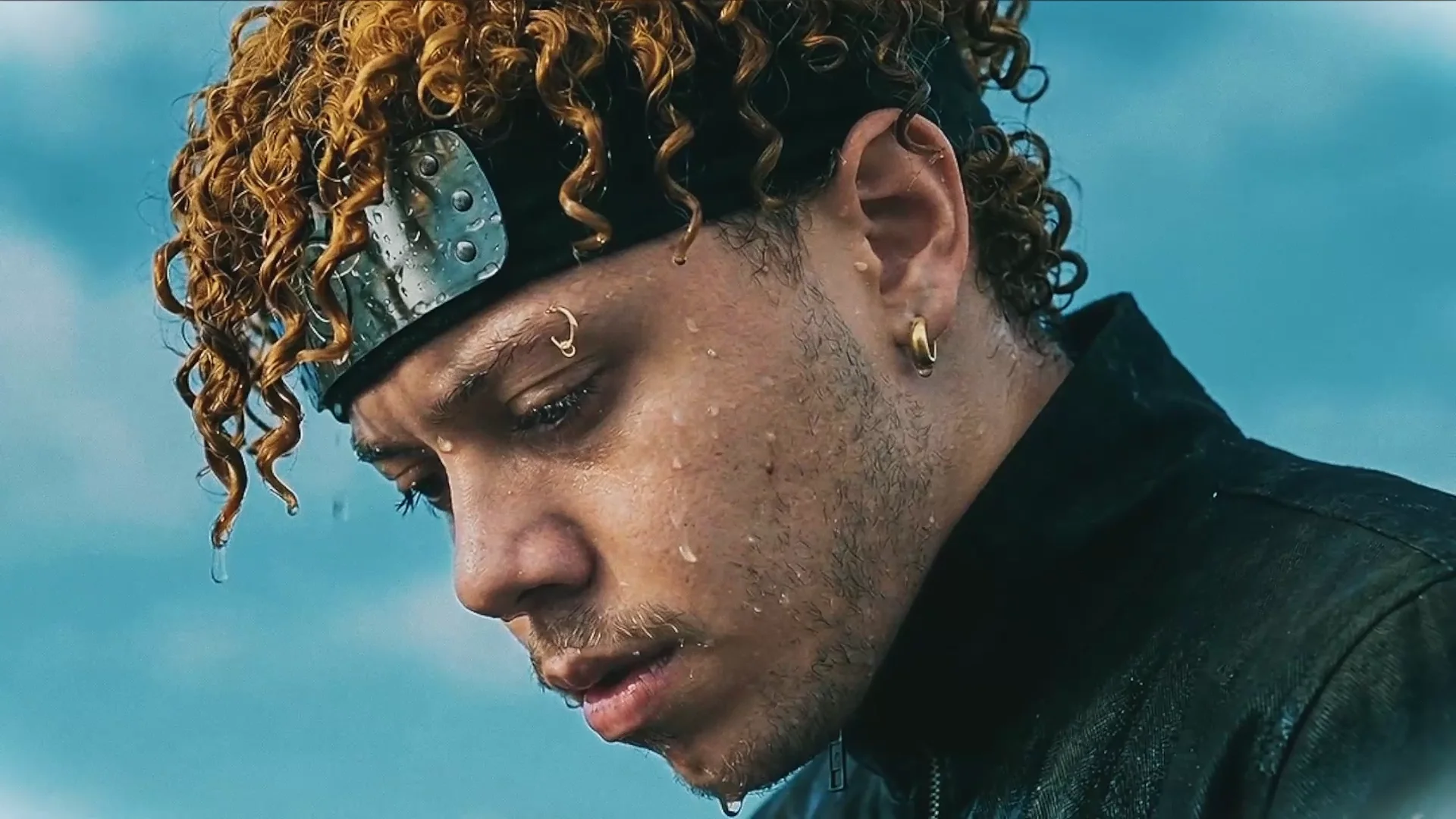
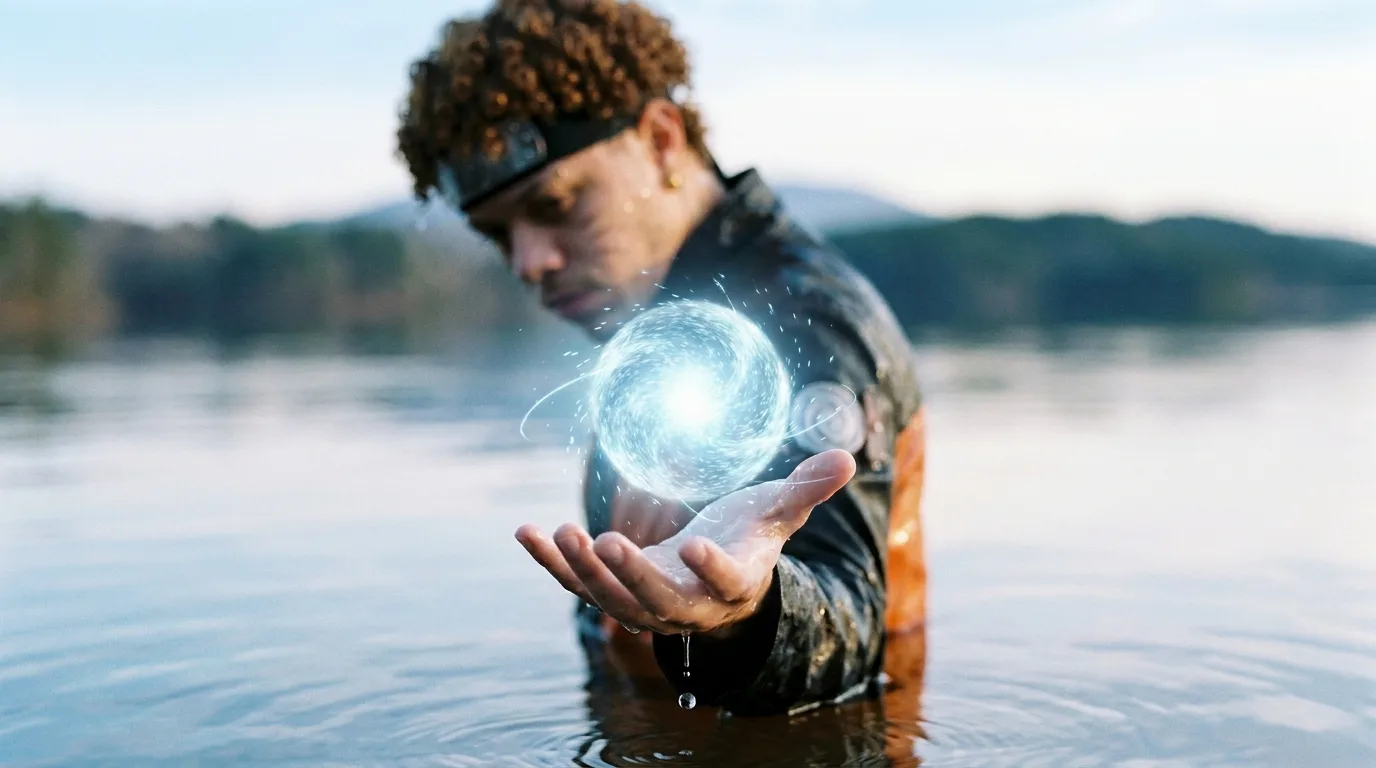
He surfaces, head bowed, water still running off him. It is the only extreme close in the film and it is where a viewer decides whether this is a person or an approximation. Once it came out right it stopped being a shot and became the reference every later frame with a face was measured against.
The discipline that follows from that is unglamorous and absolute: never generate over something already approved. A better version of an anchor is not an improvement, it is a second anchor, and two anchors is the same as none.
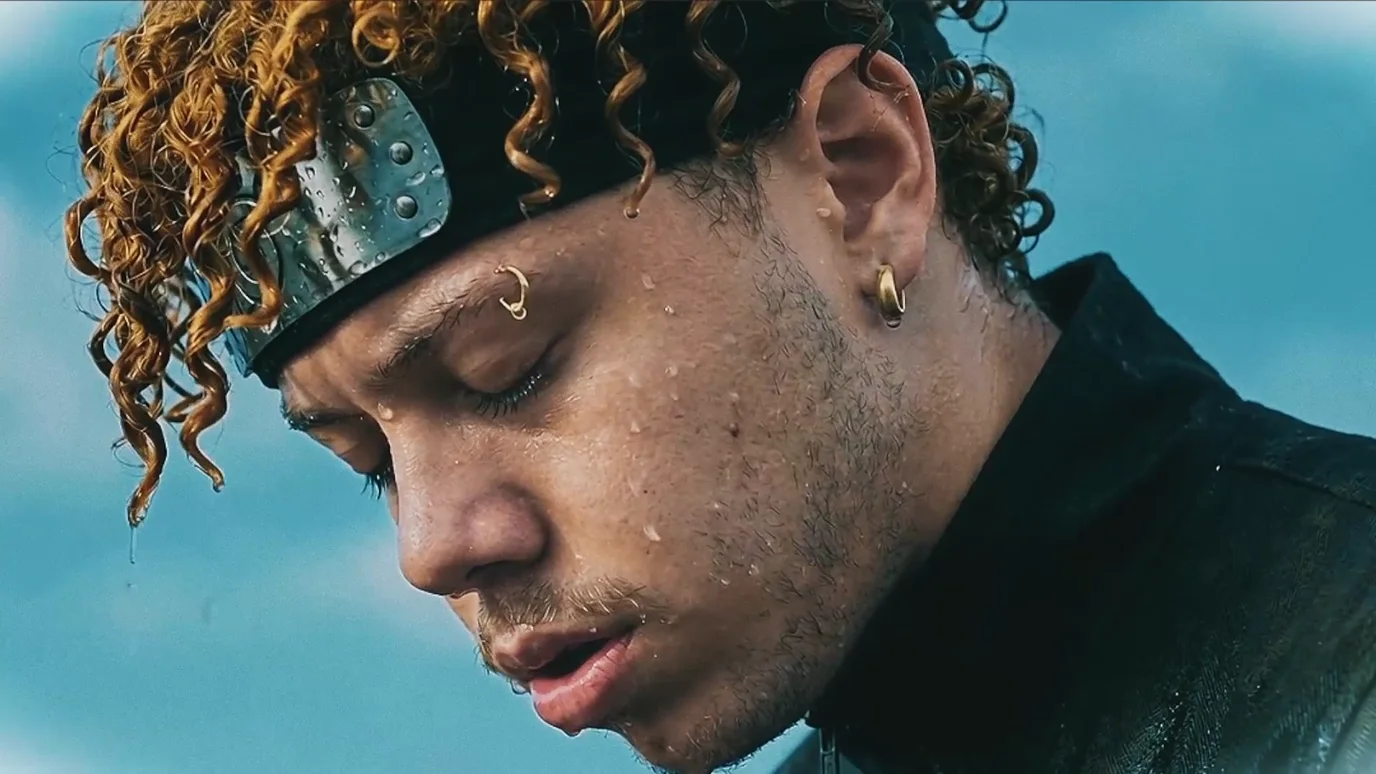
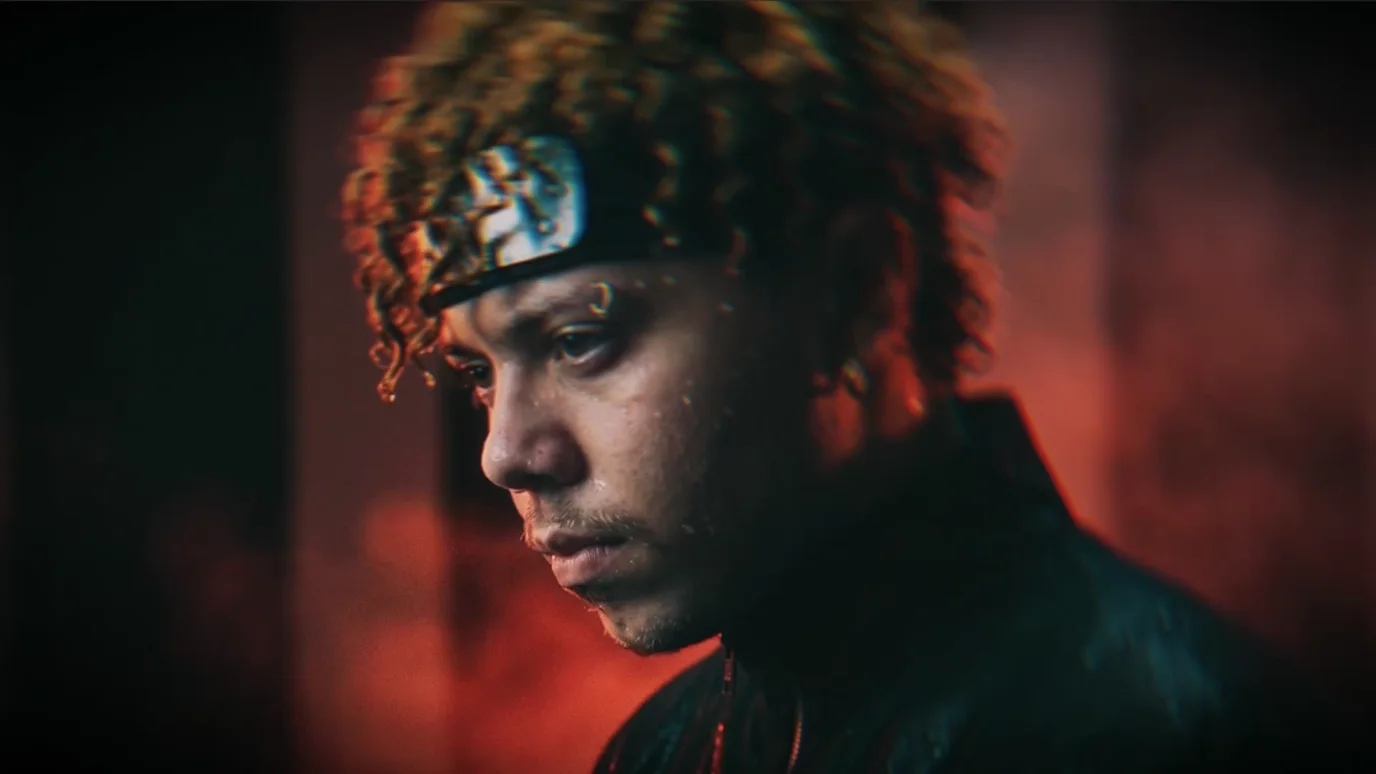
The blink
Those two frames are one cut. His eyes close on the last frame of the first and open on the first frame of the second, and he shows no reaction to being somewhere else. It only works because nothing else moves: same scale, same angle, same distance. The first version changed all three at once and the cut read as a mistake rather than a transition.
05The shape
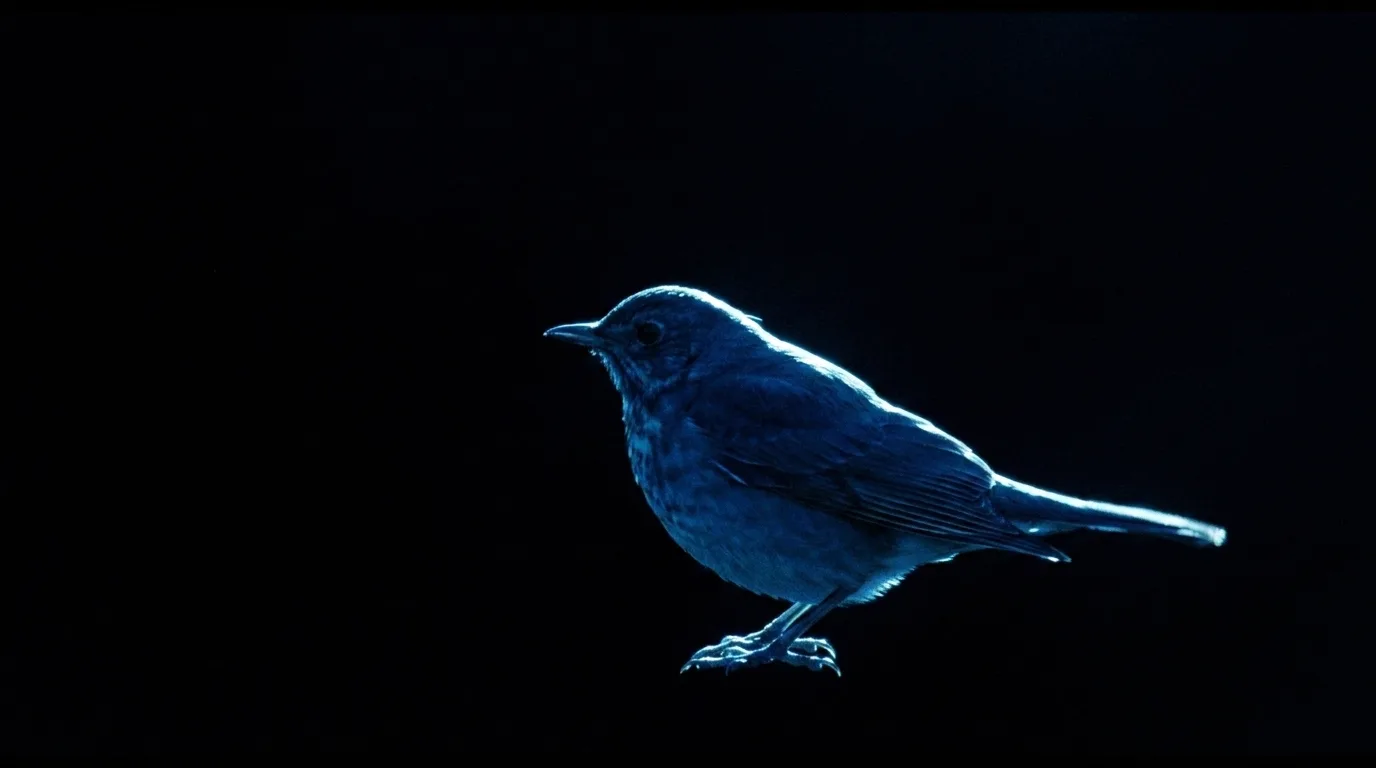
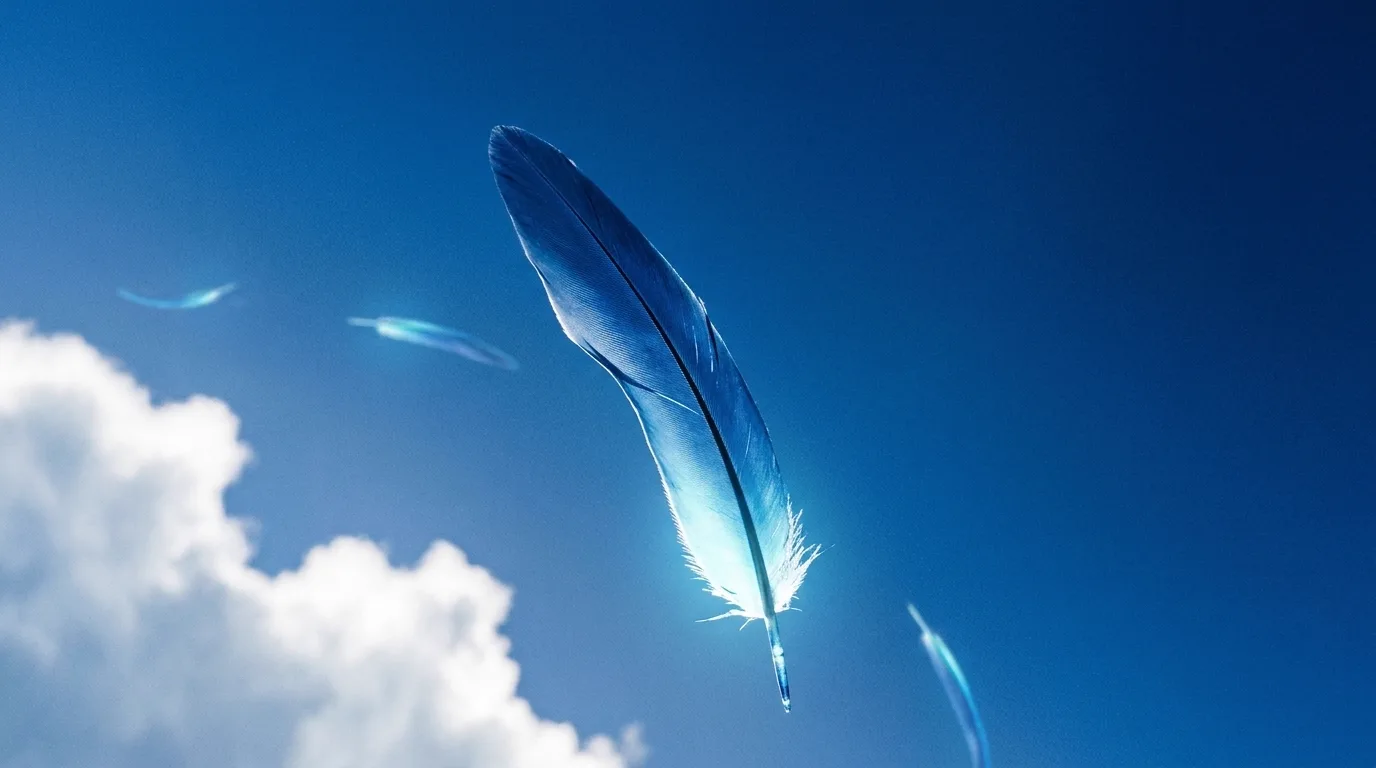
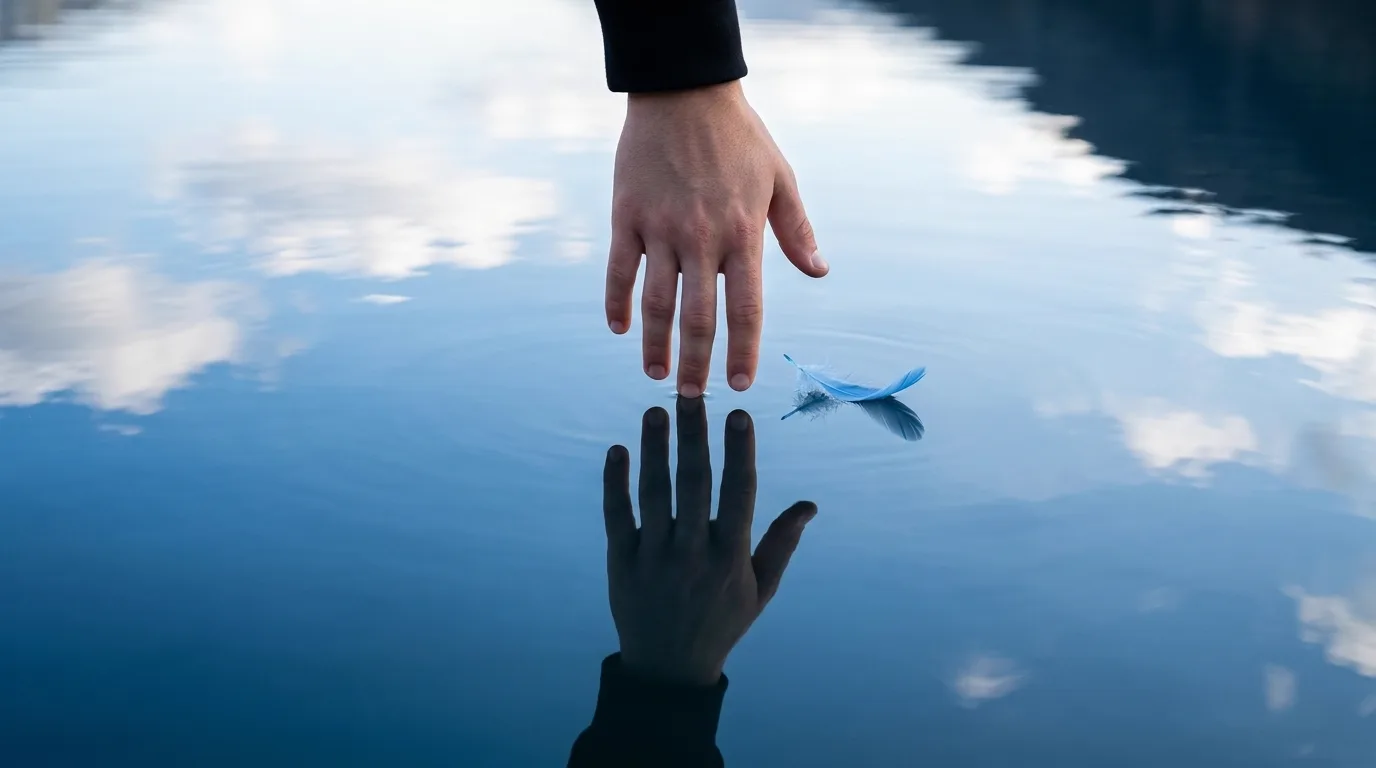
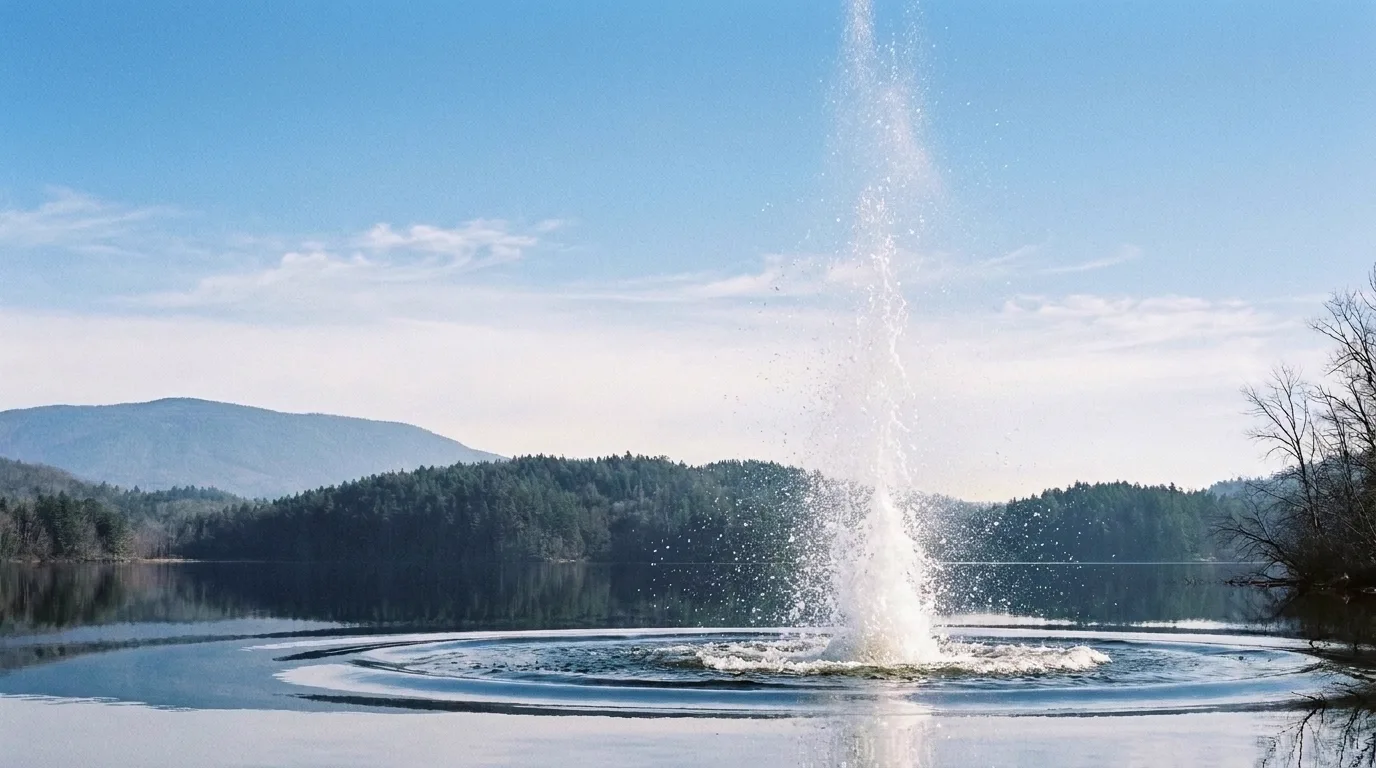
A bird leaves a feather. He falls, sinks, comes back, finds the feather, and leaves it there.
He does what he knows how to do and walks into the trees. The feather stays on the water. Everything in the edit is arranged around two rhymes, one inside the other.
- InnerIt opens on something small and blue leaving upward, and closes on something small and blue leaving into the trees.
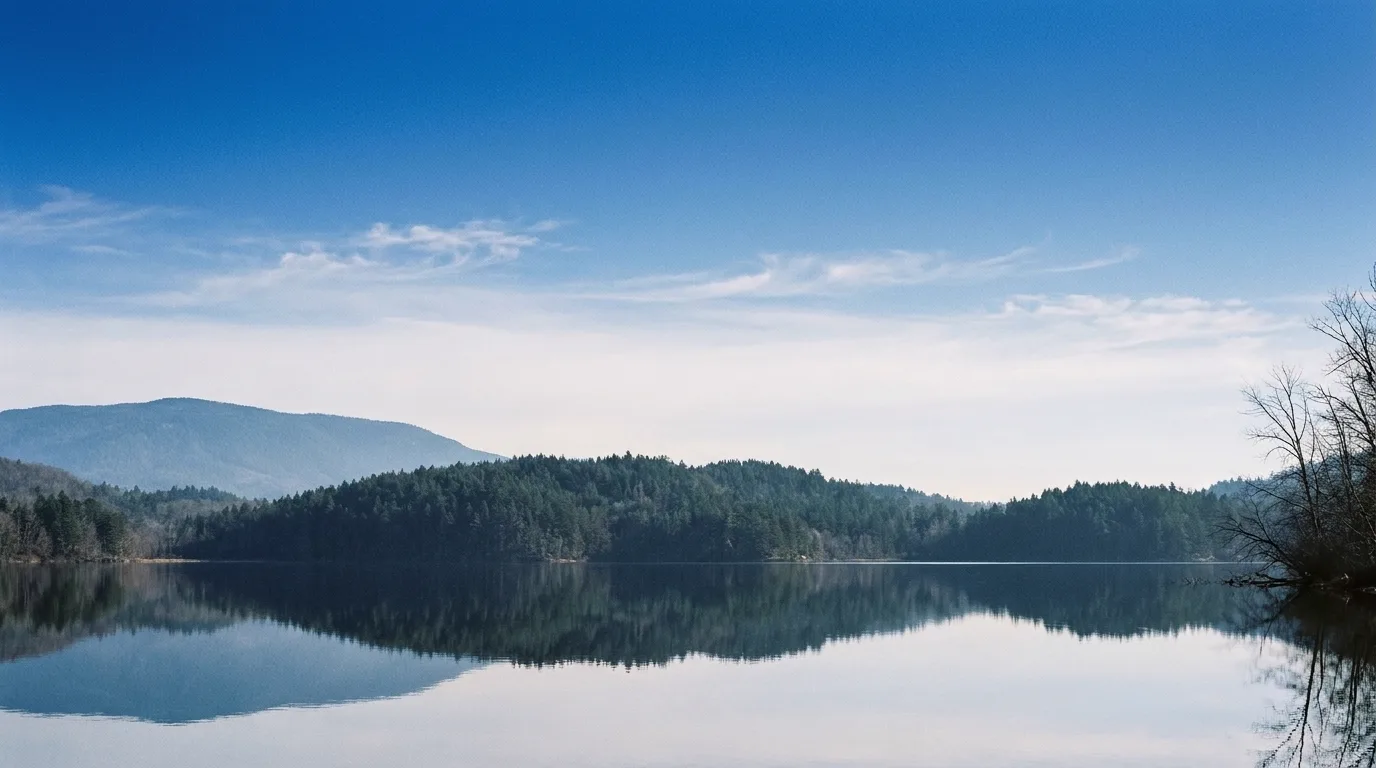
- OuterThe feather falls near the beginning and lands near the end. The film ends on what stayed, not on who left.
06Motion
Video was generated only where the movement is the content.
A still frame with a slow camera move over it costs a fraction of a generated second, and for most of this film that is all the shot needs. The fall is the exception. Falling is the subject, so the fall is where the expensive tool earns its place, and the shots chain into each other with the last frame of one becoming the first frame of the next.
Every video prompt had to declare four things: what the subject does, what the camera does, what stays completely still, and where the thing ends up on the final frame. Prompts that skip the third and fourth produce drift, which is what a generated shot does when nobody told it when to stop.
07The numbers
The whole film cost about nine dollars.
That number is only interesting because of what it is not. It is not the cost of a shortcut. The nine dollars bought twenty two approved frames and twenty one generated clips, and it was cheap because almost everything expensive was rejected before it ran.
08The honest part
Some of these frames are broken, and they shipped broken on purpose.
A piercing and some jaw stubble were inherited from the character sheet and carried into every shot. One boot sole is assembled the wrong way round. One shot of the thing behind the bars lost the fog that was supposed to keep it unresolved. And there is a gold hoop in his ear in every close, which law five says should not be there at all. Every one of these is visible if you stop the film and look.
The test is how the piece will be seen, not how it survives being inspected.
Each was priced honestly: what it costs to fix, against whether anyone watching at speed would ever meet it. All four lost that argument and stayed. The ear is the interesting one, because fixing it meant regenerating the anchor, and the anchor is the one file that is never regenerated. A law lost to a stronger rule, which is what a real hierarchy looks like.
Publishing the list is cheaper than hoping nobody notices, and it is the difference between a standard and a superstition.
09Cut
A fight scene was written, built, paid for, and then buried.
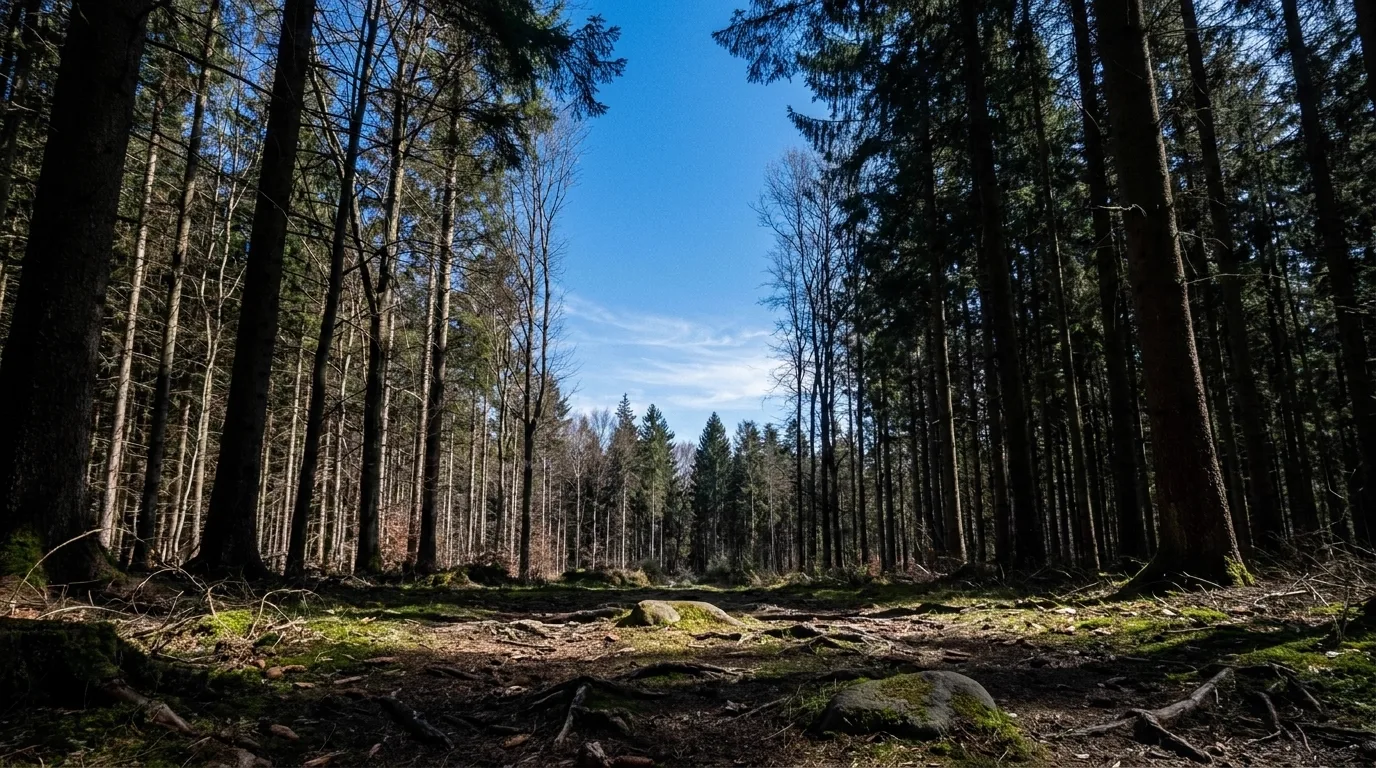
There was a version with a clearing and a fight in it. It was cut because it threw away material that already worked, and because the piece is about falling rather than winning. The clearing is still in the archive, finished and unused.
Two other things were tried and reversed: cutting the bird and the feather entirely, which would have removed both rhymes, and a shout over the last light, which made a quiet ending loud. The good version of this film is mostly a list of things that did not happen.
Credits
- WorkPersonal. No client, no brief, no budget beyond the generation cost.
- RoleDirection, character design, art direction, image and video generation, edit.
- SourceThe third opening of Naruto Shippuden, reinterpreted. All imagery here was generated for this piece.
- Film39 seconds, 1920 by 1080.
- Not shownThe frames used as composition reference, which belong to the original.