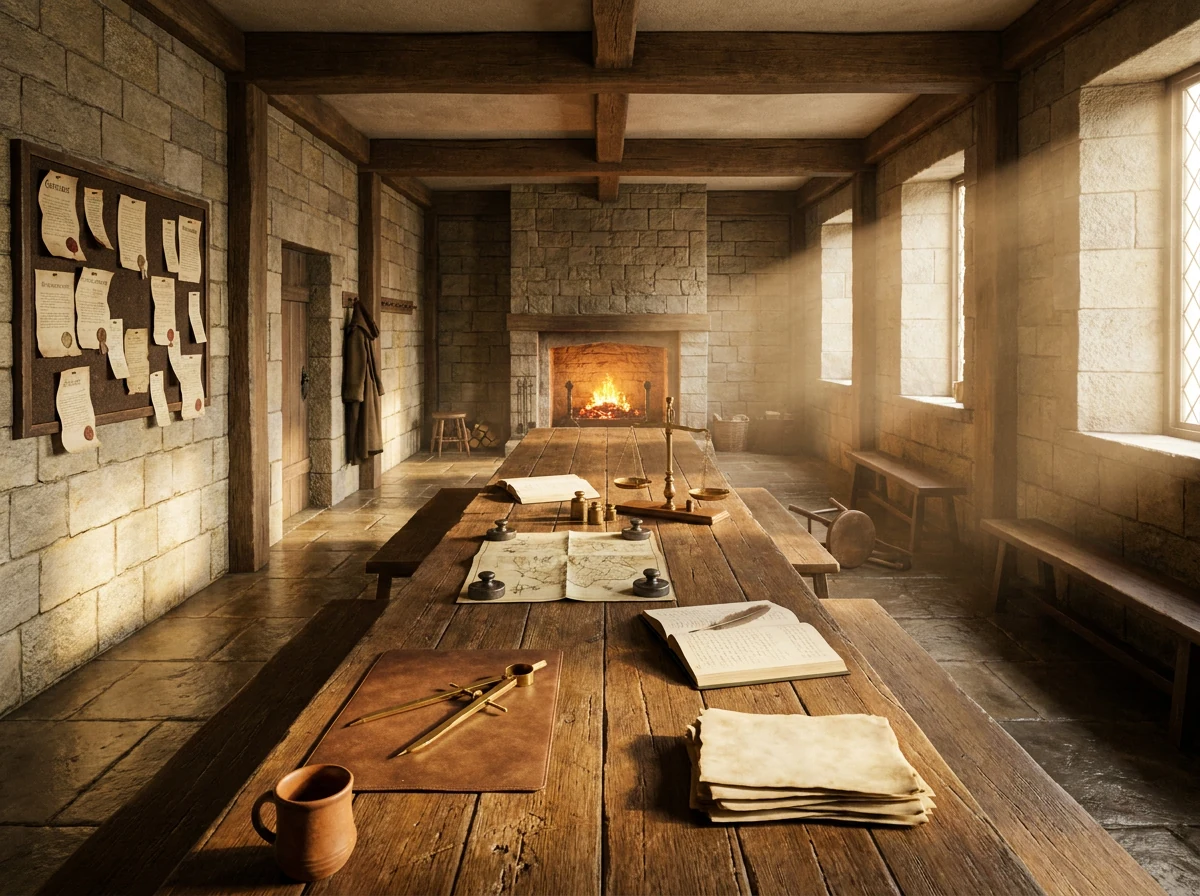
THE GUILD
Five races on one measured canon. A production system for a line that has to ship a new sculpt every month and have it read as family.
The hero frame above is the easy part.
One good render proves taste. It proves nothing about what happens in month four.
A miniatures line does not fail on its first sculpt. It fails on its tenth, when the ear that was elegant in January has drifted, the head is a half size too large against the body it shares a shelf with, and nobody can say which of the two is wrong because nothing was ever measured. The expensive problem is not making a beautiful piece. It is making the next beautiful piece belong to the same family as the last one.
So this study is not five characters. It is one canon, and five bodies that have to survive it.
Geometry comes off a mesh, not out of a prompt.
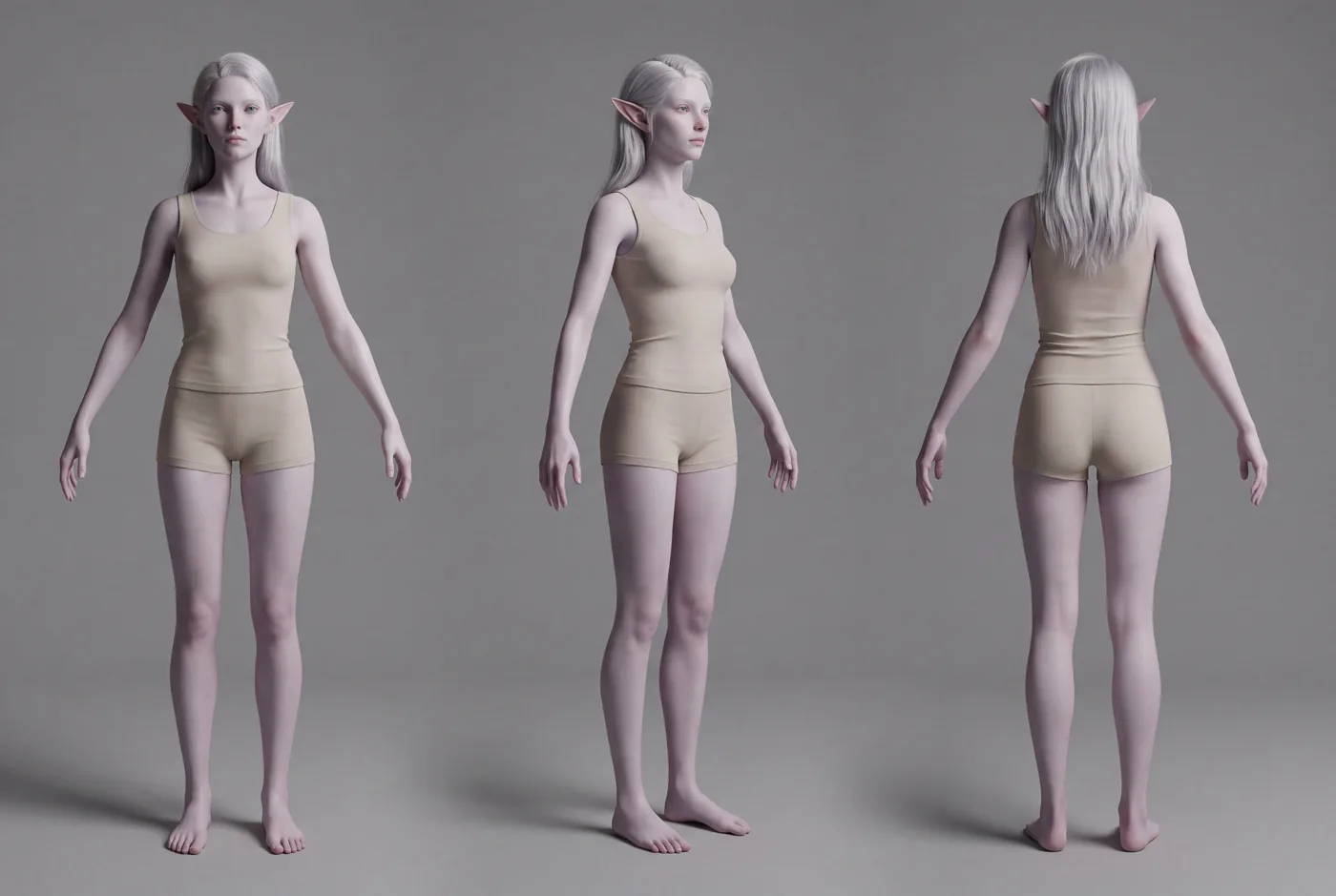
Every race starts as a locked sheet and a measured body: front, three quarter, back, at a fixed camera and a fixed height. Proportion is read off the mesh with instruments and written down, so the next race is checked against a number instead of against a memory of the last render.
Six scripts and twelve laws run the pass. A piece that misses a law is rejected before anyone argues about whether it looks nice.
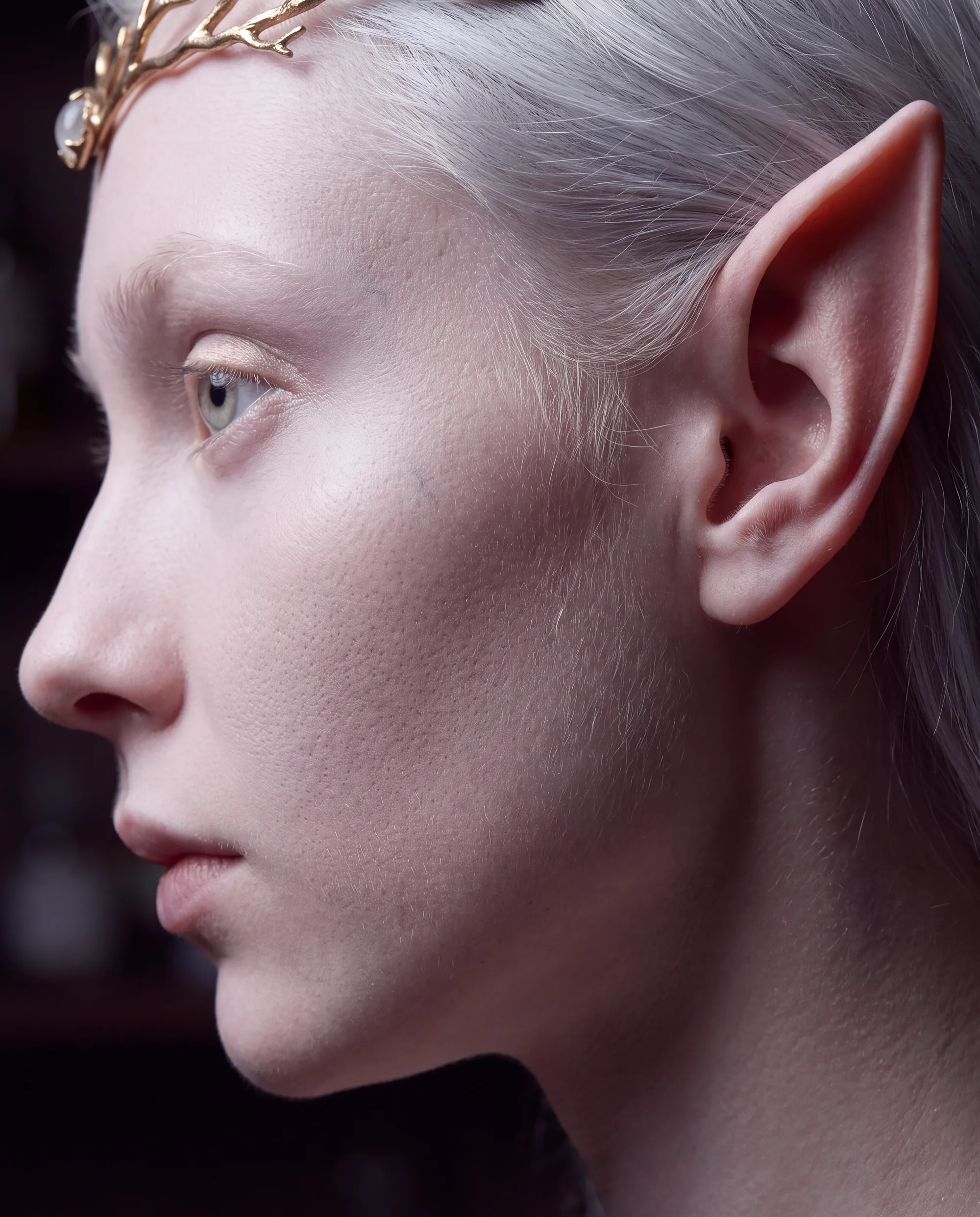
The law gets verified in the detail, at portrait distance.
Material is where synthetic work usually confesses. Skin that holds up in a wide shot turns to plastic the moment you come in close, so the pass is judged where it is hardest: pore, vellus hair, the vein under thin skin, keratin against metal, the wet line of an eye.
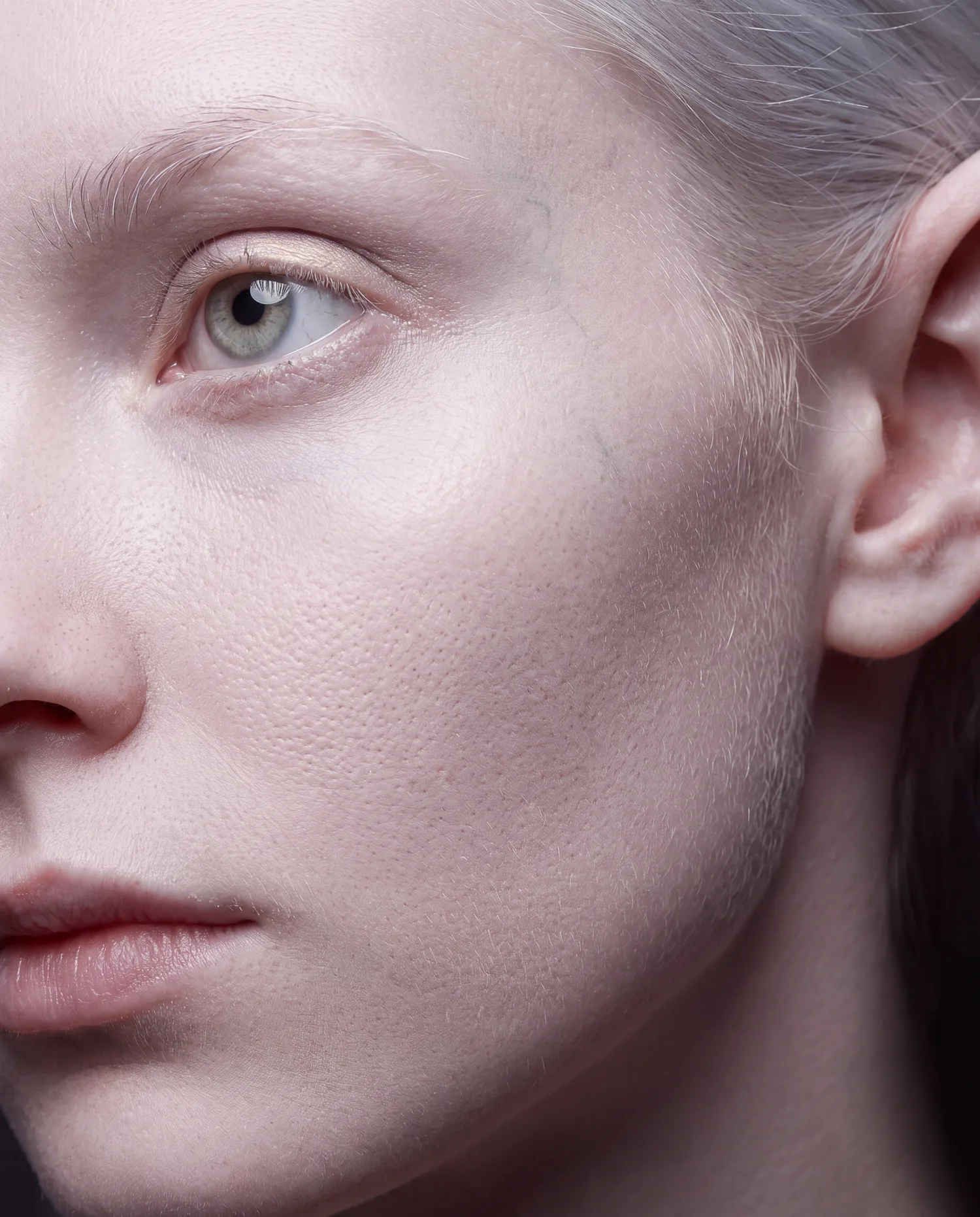 Elf / skin
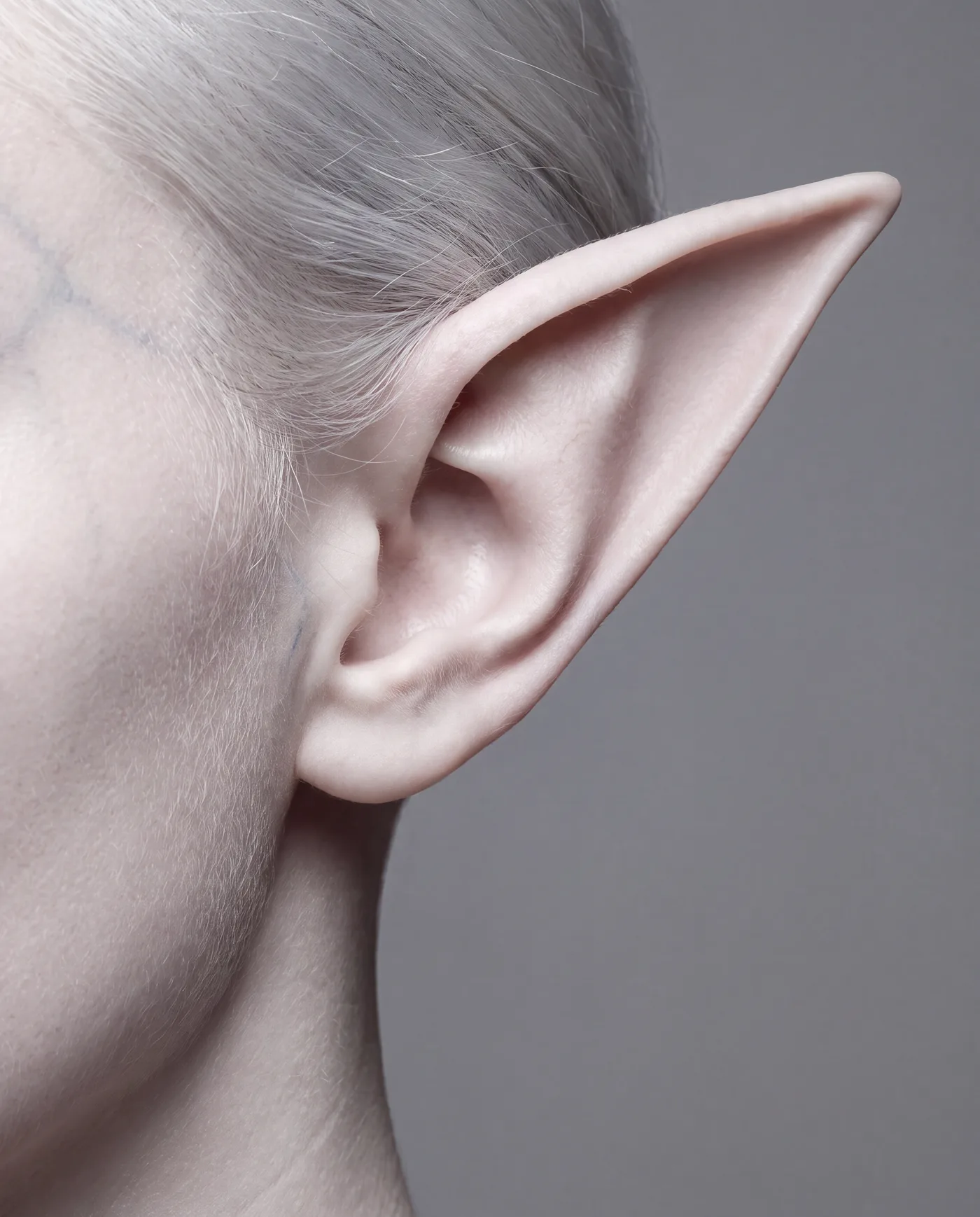 Elf / ear
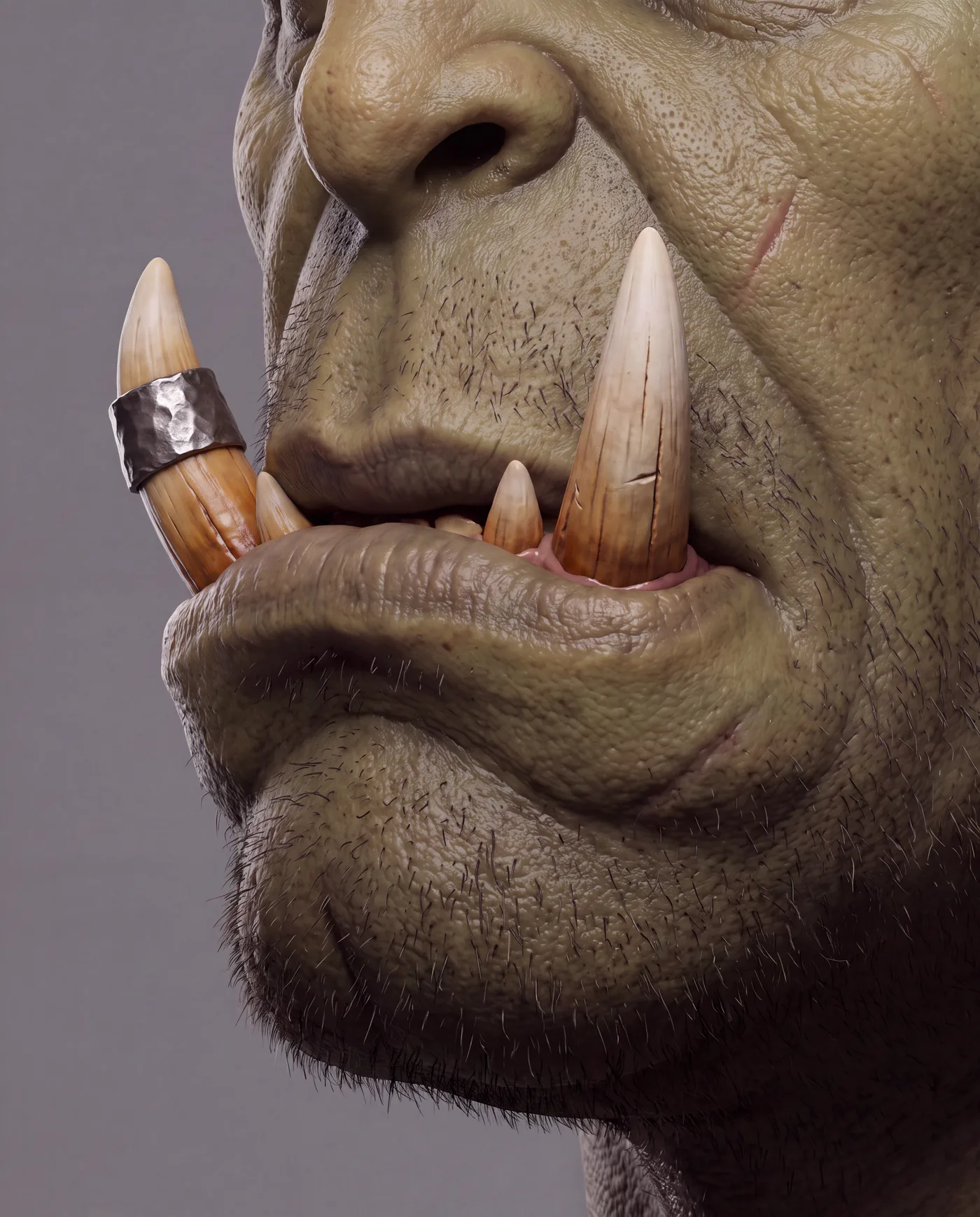 Orc / tusk
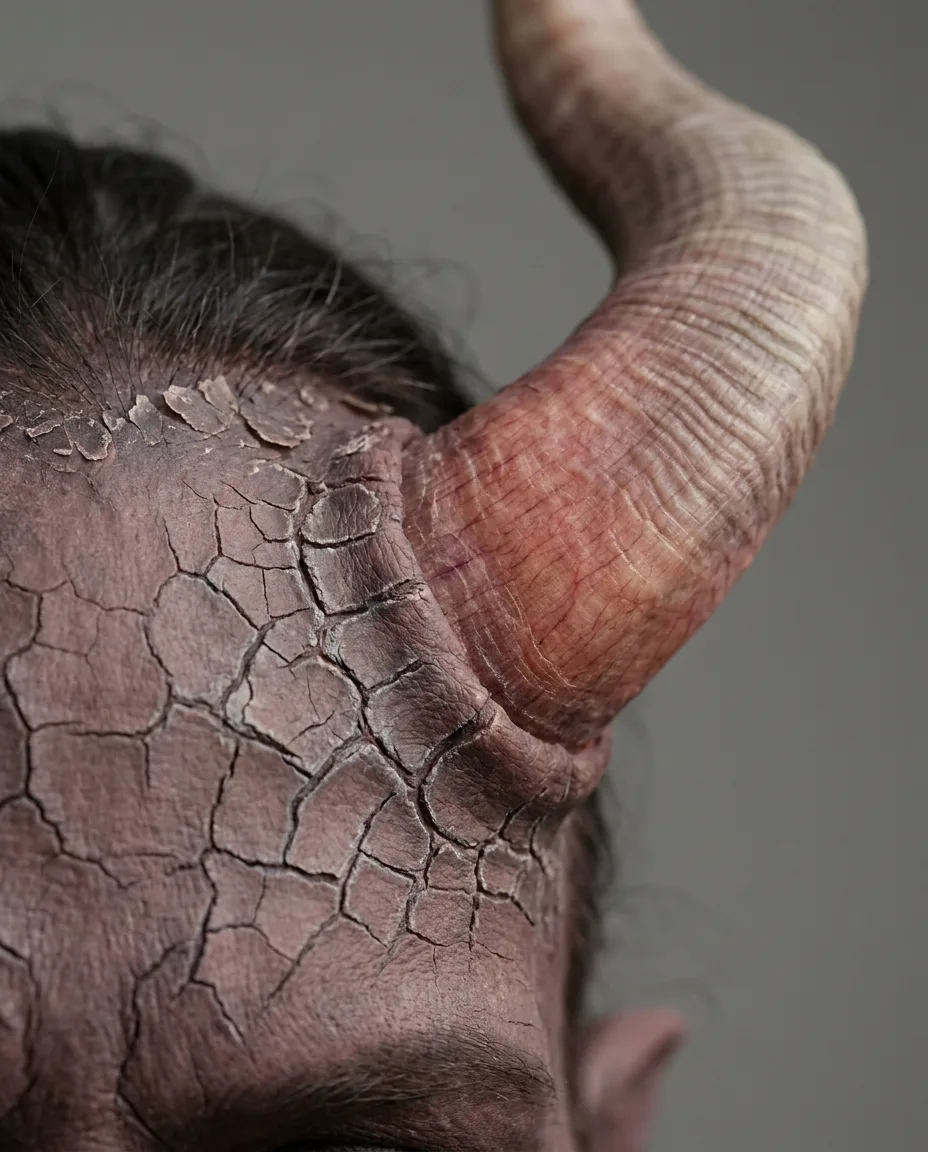 Tiefling / horn
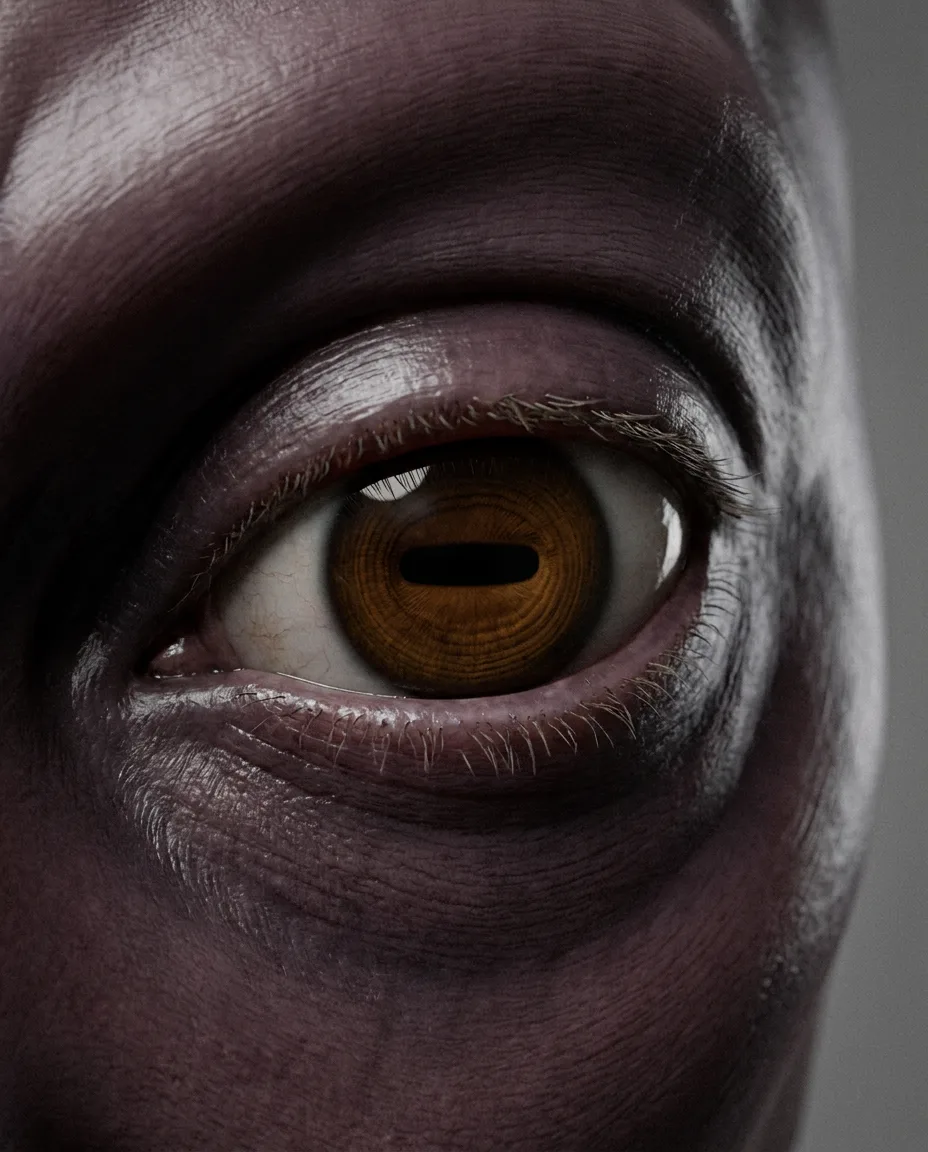 Tiefling / eye
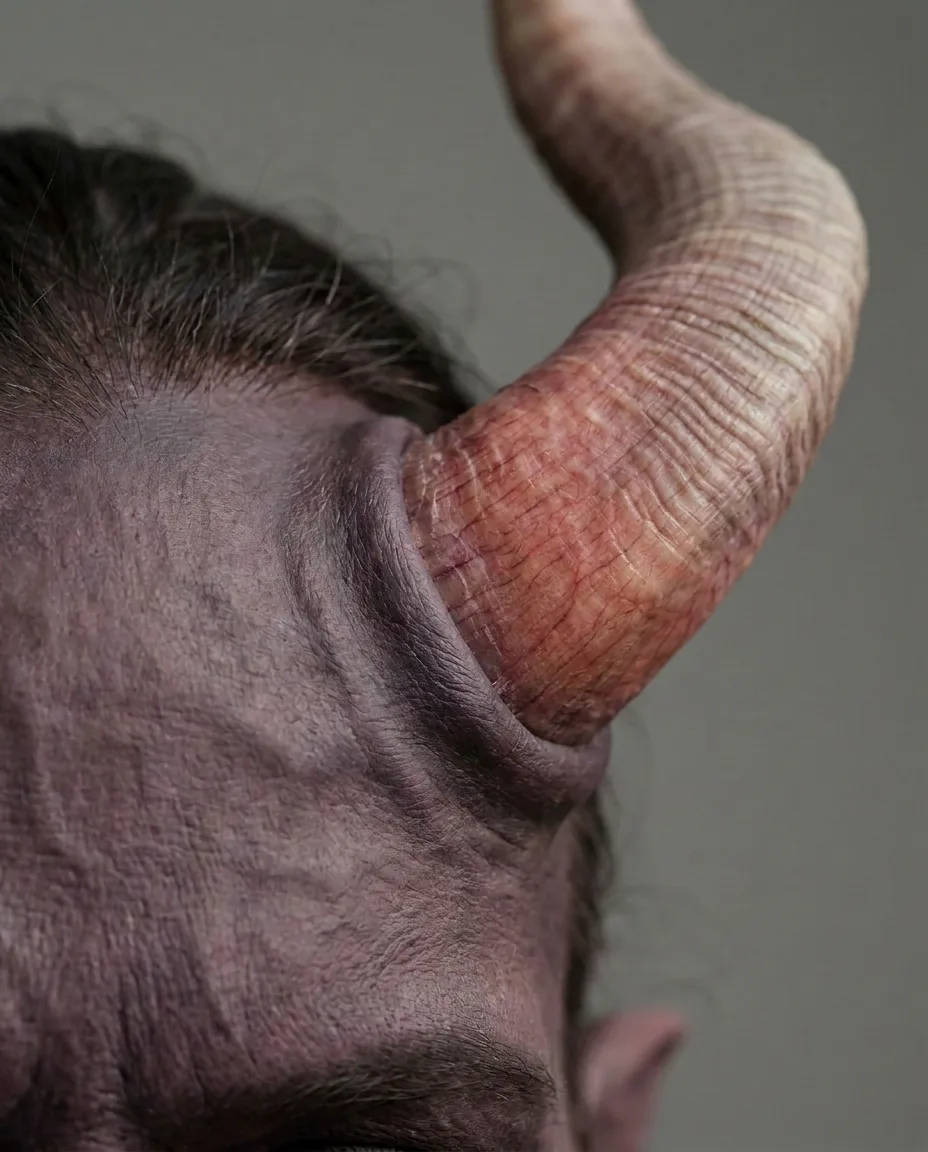 Tiefling / skin
Three faces that were never meant to be siblings.
An elf, an orc and a tiefling share almost no anatomy. Held side by side they should still read as one line: lit the same way, built to the same tolerance, sculpted by the same hand. That is the whole test.
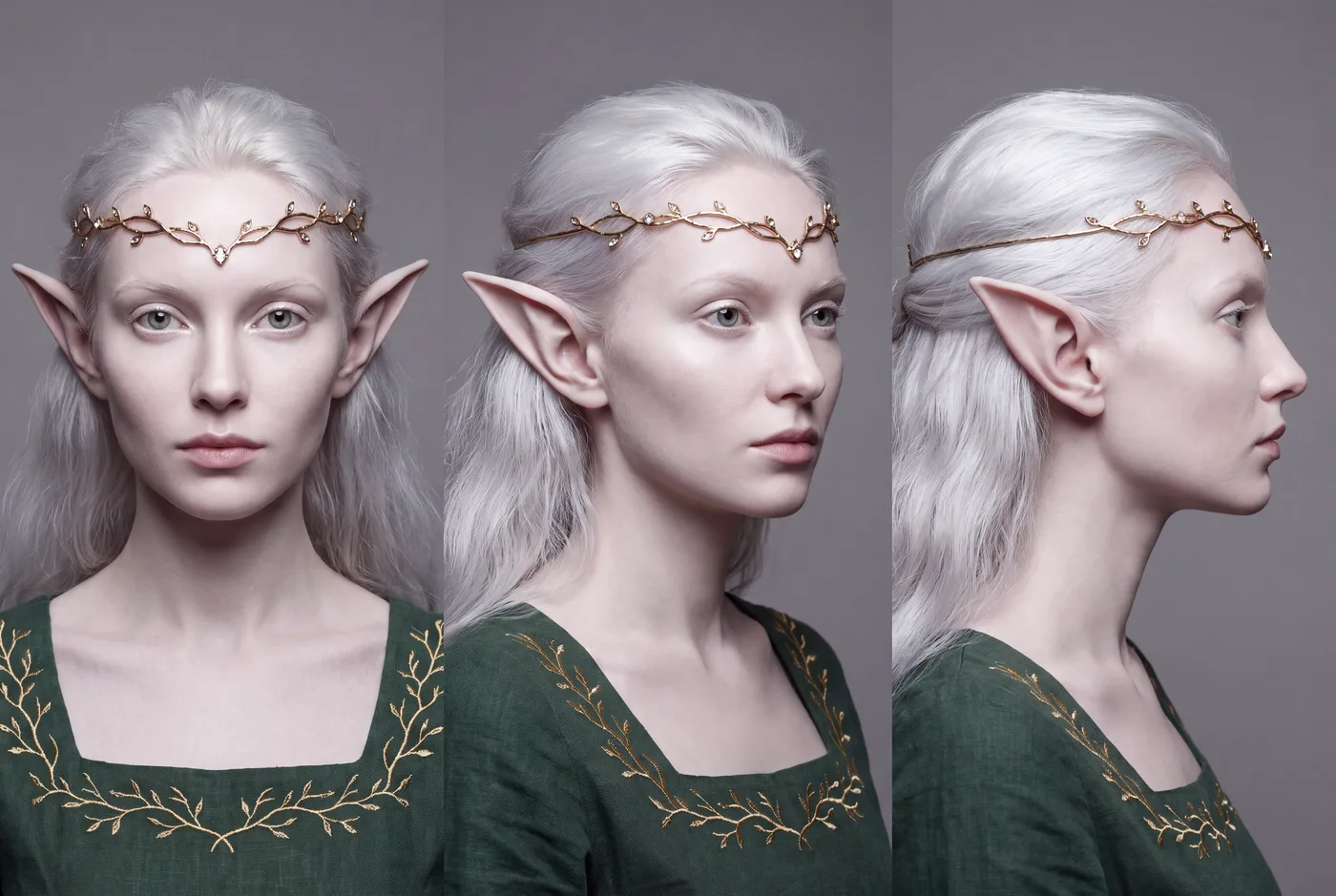 Elf
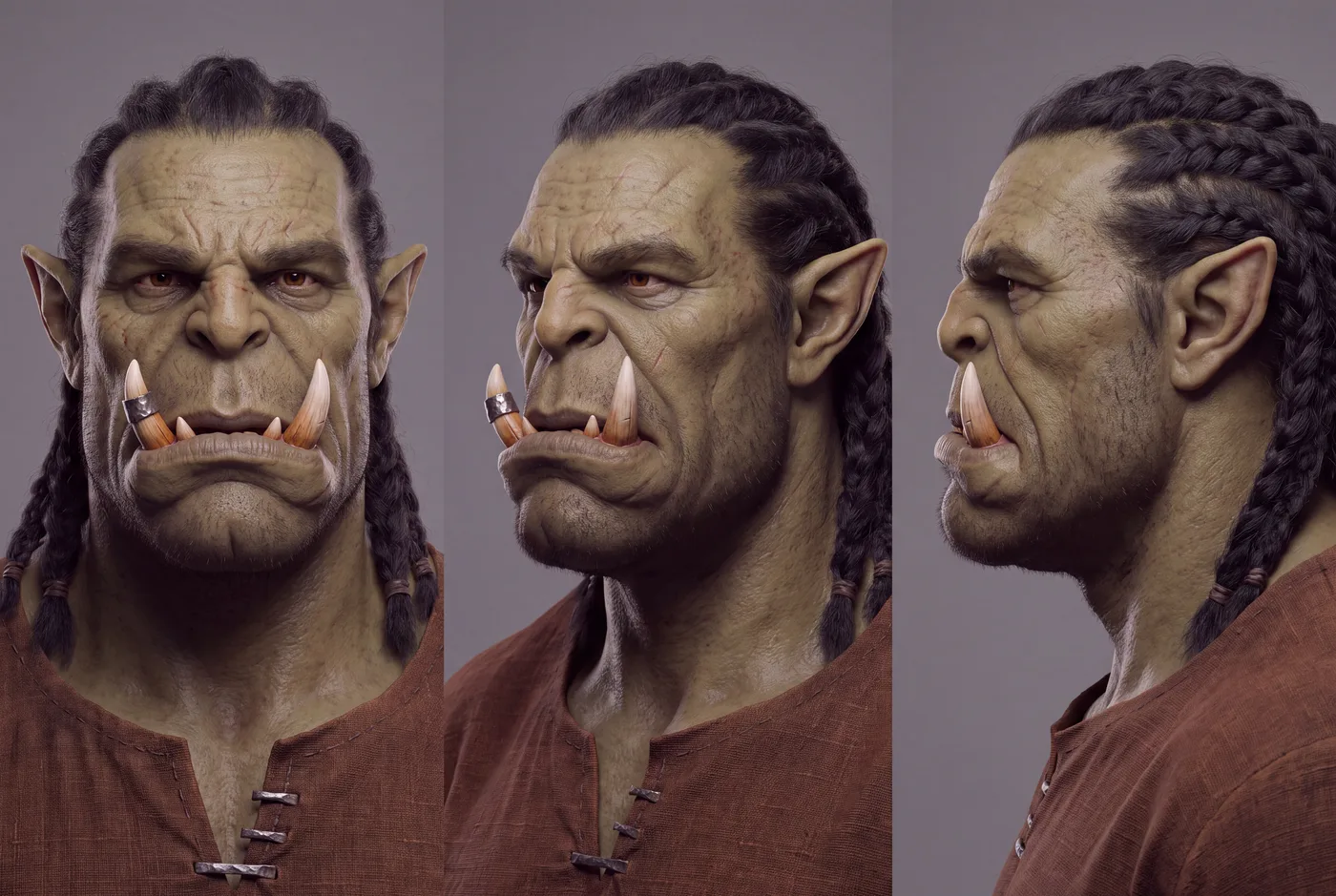 Orc
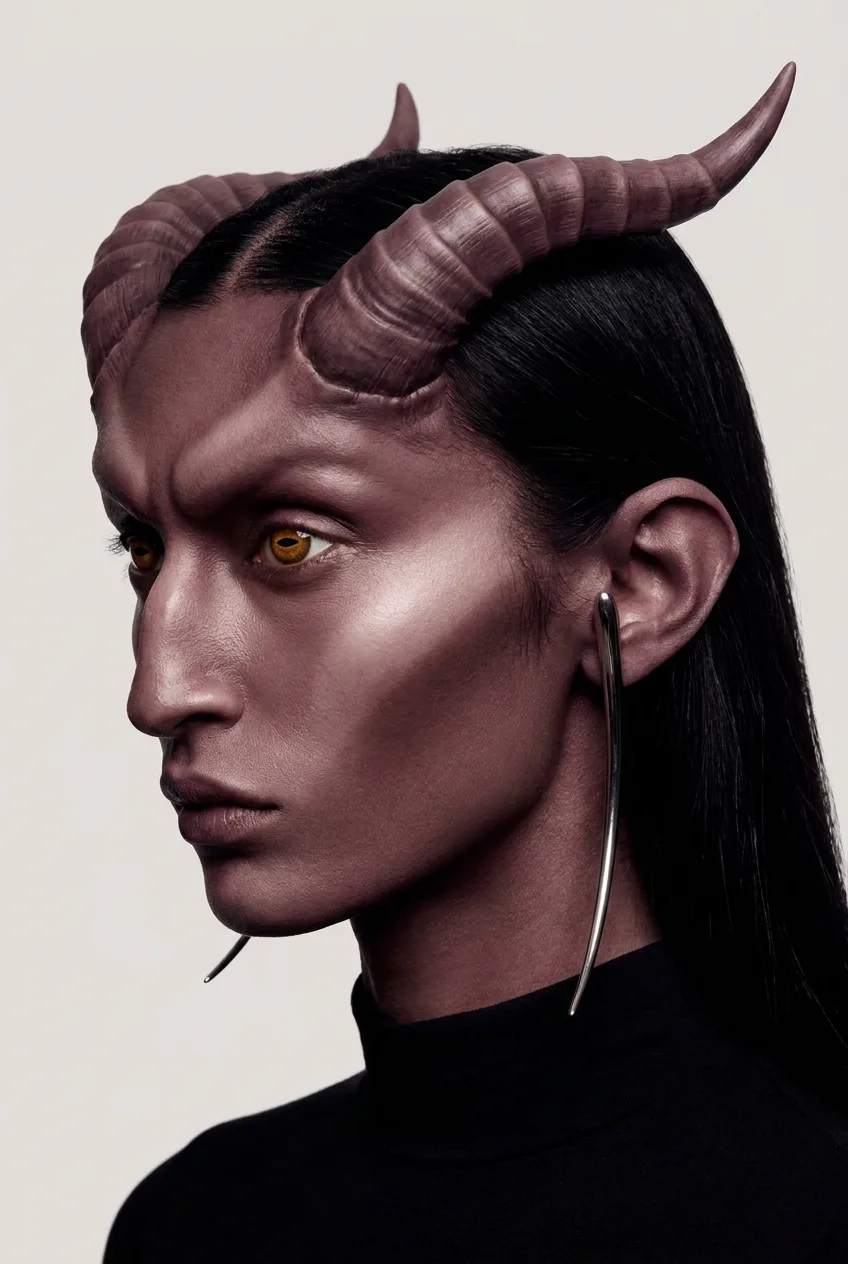 Tiefling
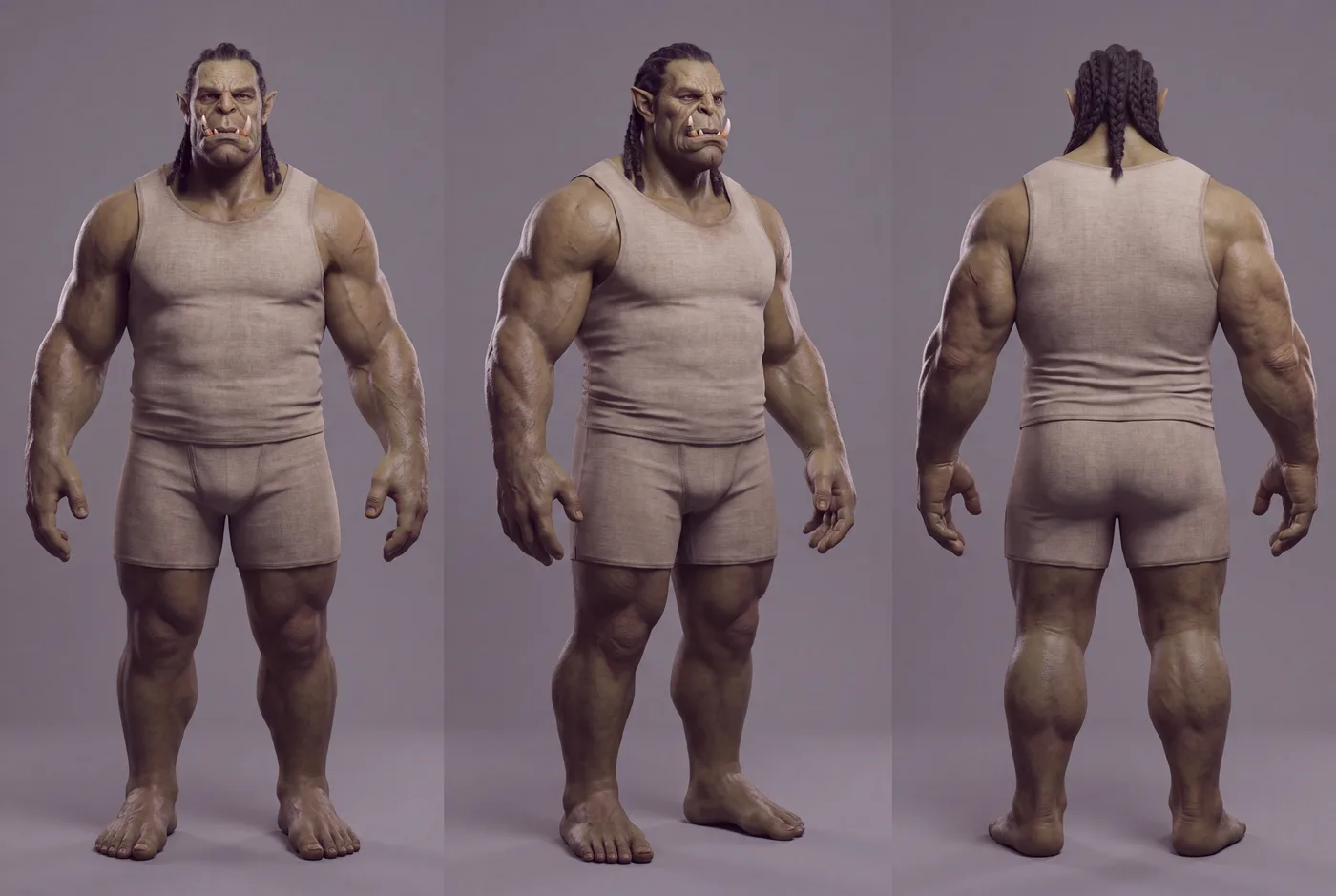 Orc / body
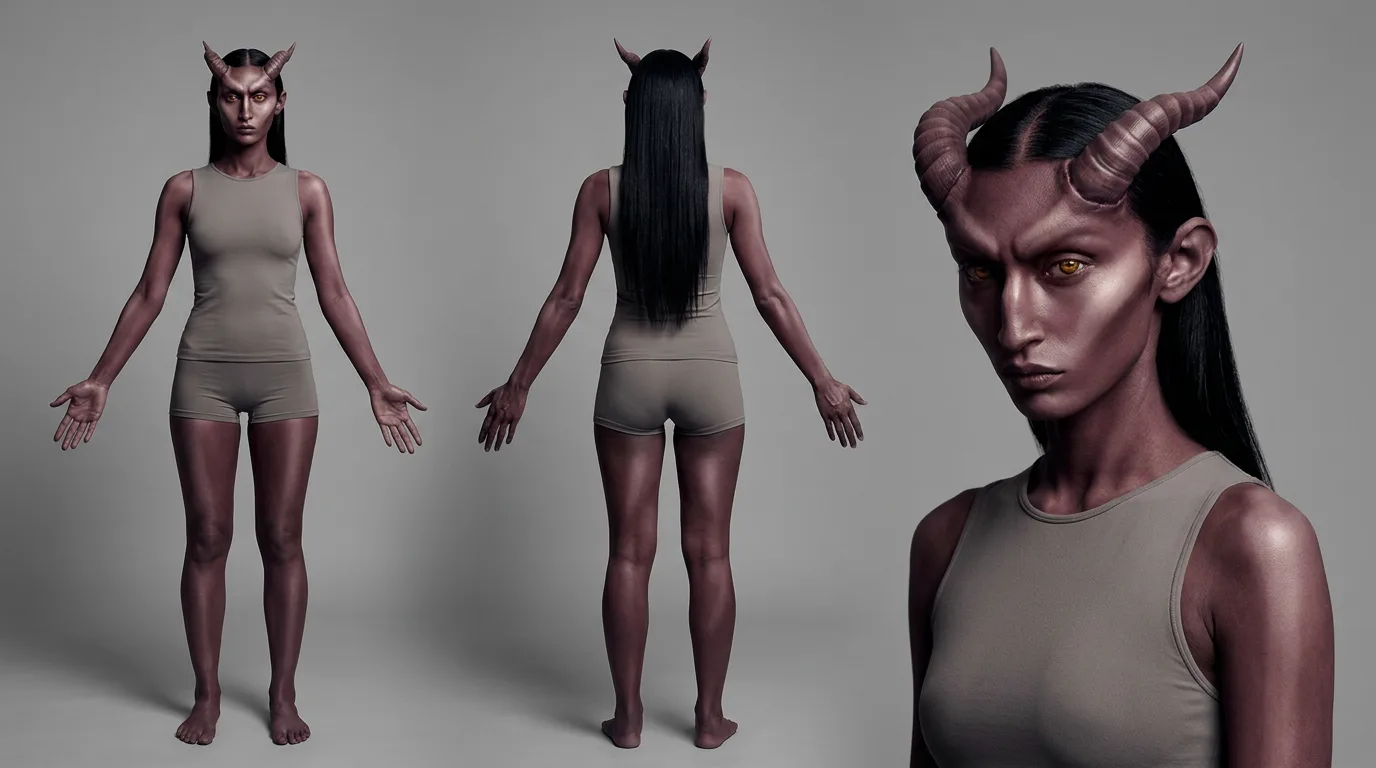 Tiefling / sheet
Two of the five are not done, and the unfinished ones are the interesting ones.
The dragonborn head is in study. Its body proportion is still open, and it is the last measurement the allometry needs before the system closes and a sixth race becomes a chore instead of a project.
The human has not started, which is a scheduling mistake worth naming: the human is the anatomy control. Everything else is measured against it, so it cannot be the last one built.
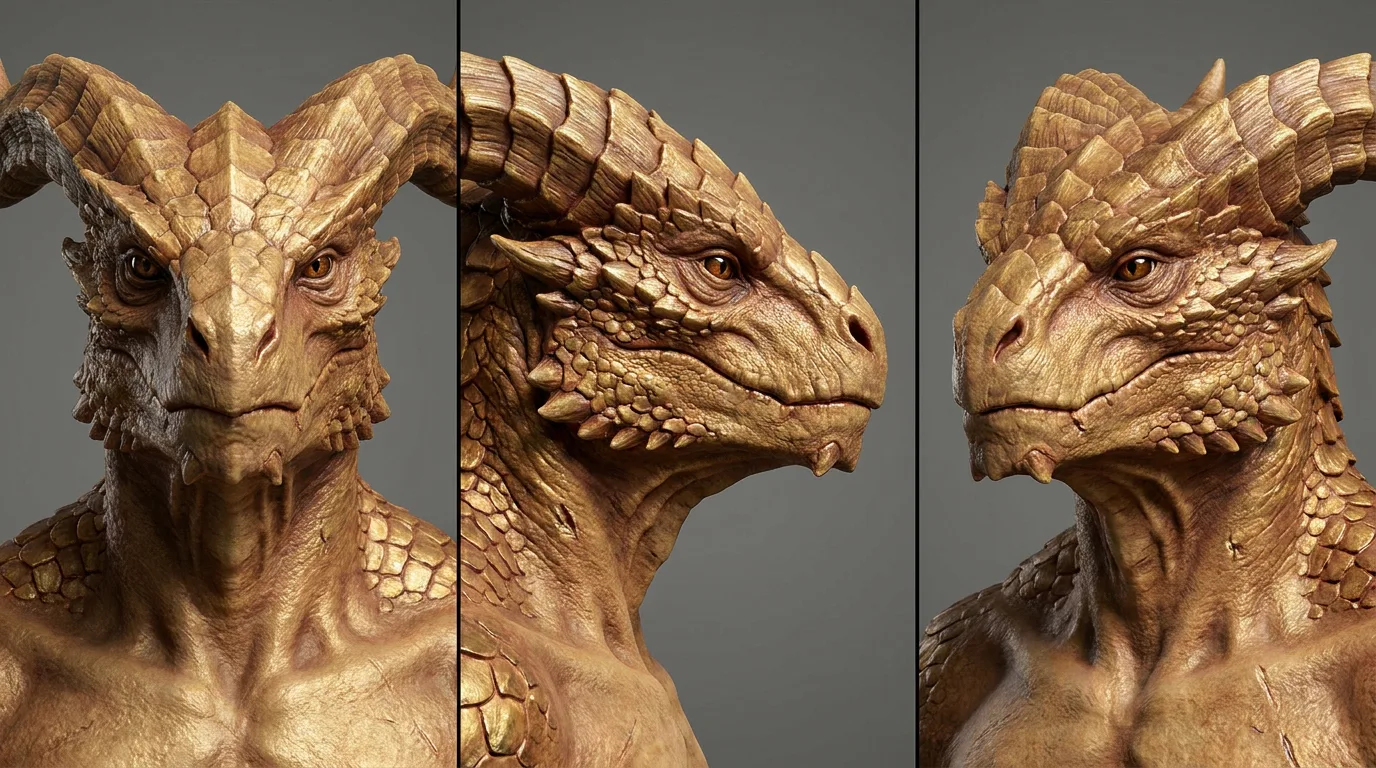
Where the set stands.
A finished piece proves talent. A series with its rejects still in it proves a process, and a process is the thing that survives contact with a release calendar.
| Race | State | Note |
|---|---|---|
| Elf | ■ Locked | Body, mesh and skin pass approved. |
| Orc | ■ Locked | Body and mesh approved. Tusk carries the silver band. |
| Tiefling | ■ Locked | Body and mesh approved. Horn and eye pass approved. |
| Dragonborn | □ In study | Head in study. Body proportion still open, and it is the last measurement the allometry needs. |
| Human | □ Not started | The anatomy control. Cannot be last, because everything else is measured against it. |
The system is the deliverable.
Five races, one canon, measured rather than eyeballed. Race six costs a fraction of race one, and it arrives on the shelf looking like it was always part of the set.