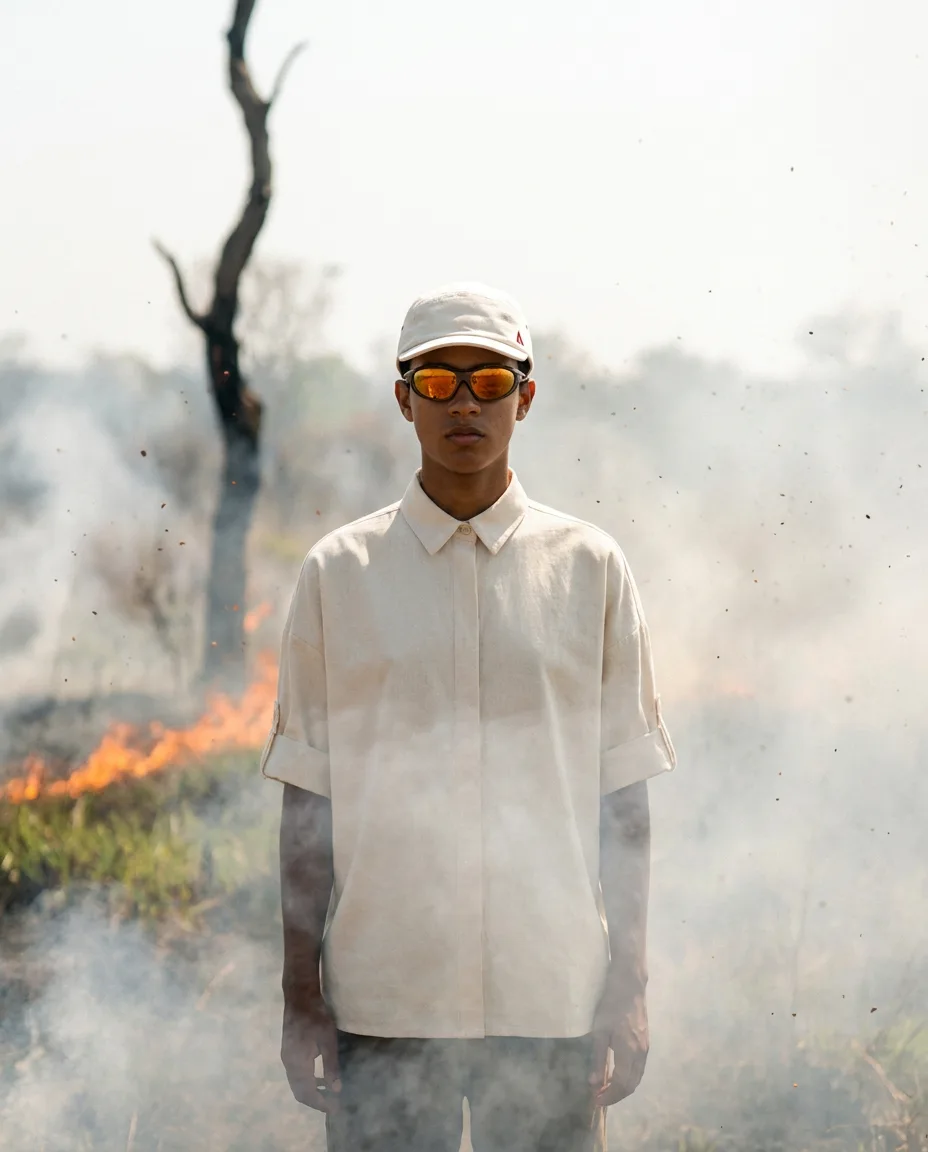
Case 004 · Sertão-futurism · Minas Gerais, Brazil
GUARÁ
A fashion house for a sertão that does not exist, built alone in one afternoon.
The short version
This label did not exist when the afternoon started.
Name, DNA, collection, identity, lookbook, campaign and a 26 second film. No client ordered it. It exists to prove one thing: once production stops being the constraint, the only thing left worth paying for is the reason a decision was made.
01The thesis
Nobody ordered this label. It came out of a failed conspiracy and a word that means closed.
Minas Gerais is an inland state in the south east of Brazil. The name means General Mines, and it is not a metaphor. In the 1690s gold was found there, and what followed was the largest gold rush the world had seen to that point. Portugal took a fifth of everything that came out of the ground, by law, and shipped it to Lisbon. Much of it kept going, into London, through debts Portugal already owed.
The gold built palaces two continents away. The region that produced it stayed poor, and still is, in the parts that are not the capital.
In 1789 that produced a conspiracy. Poets, priests, army officers and mine owners planned to declare a republic, encouraged by the one that had just succeeded in North America. The trigger was the derrama, a threatened mass collection of gold tax that was in arrears, to be extracted from the population by force. The plot was betrayed by one of its own members before it did anything at all.
Most of the conspirators were exiled. One man took the fall alone: a junior cavalry officer named Joaquim José da Silva Xavier, who had worked pulling teeth to make a living. Nobody in Brazil uses his name. They use the nickname, Tiradentes, which means tooth-puller. He was hanged in 1792 and his body was quartered and displayed along the road back to Minas. He is now a national holiday.
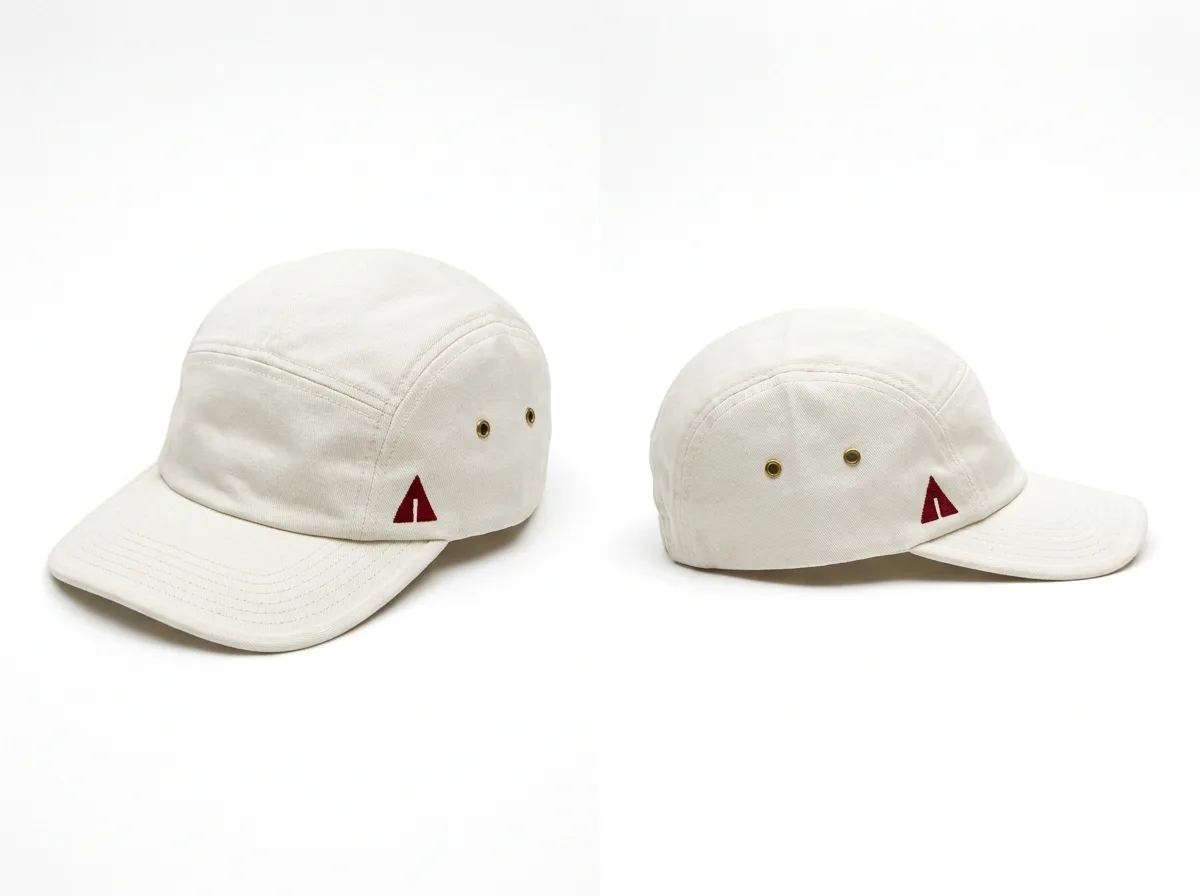
The conspirators had designed themselves a flag before they had a country: a red triangle, and a line of Virgil under it. Libertas Quae Sera Tamen. Freedom, though it be late. The state flies that flag today, motto included, chosen by people who lost and adopted a century after they lost.
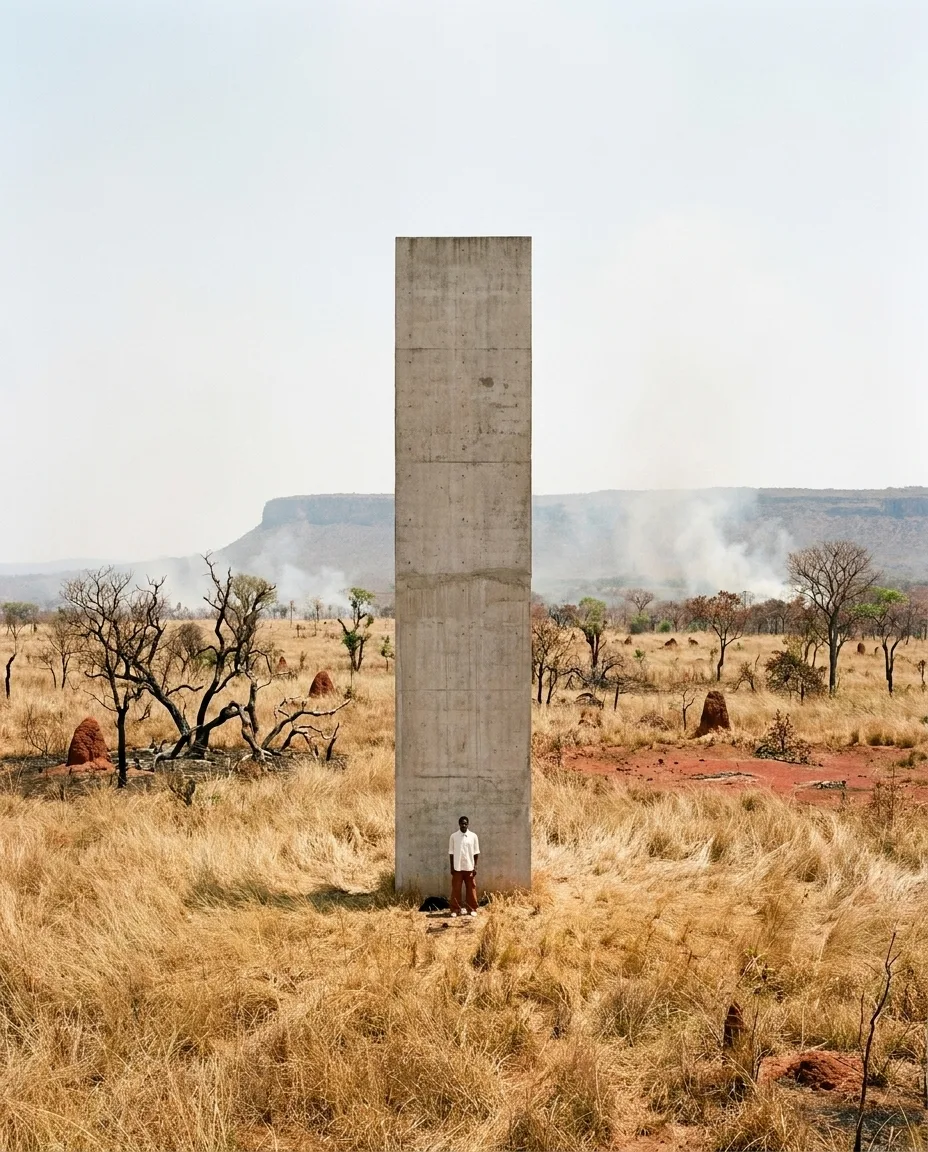
The other half of it is geology. The scrubland biome there is called cerrado, and the word means closed. The dirt runs red because it is iron oxide, which is rust, and underneath it sits the Iron Quadrangle, one of the largest concentrations of iron ore on earth, still being mined. The ground is red because of the metal, the metal built the state and drained it, and the flag flying over it is a red triangle. The colour is not symbolism. It is chemistry that happens to rhyme.
I invented none of that. One sentence came out of it.
The future that was closed, getting built anyway. Late. But built.
The collection is called TARDIA. It means late, and it arrived behind schedule and came anyway.
02The name
The totem and the name are the same object, so the symbol drew itself.
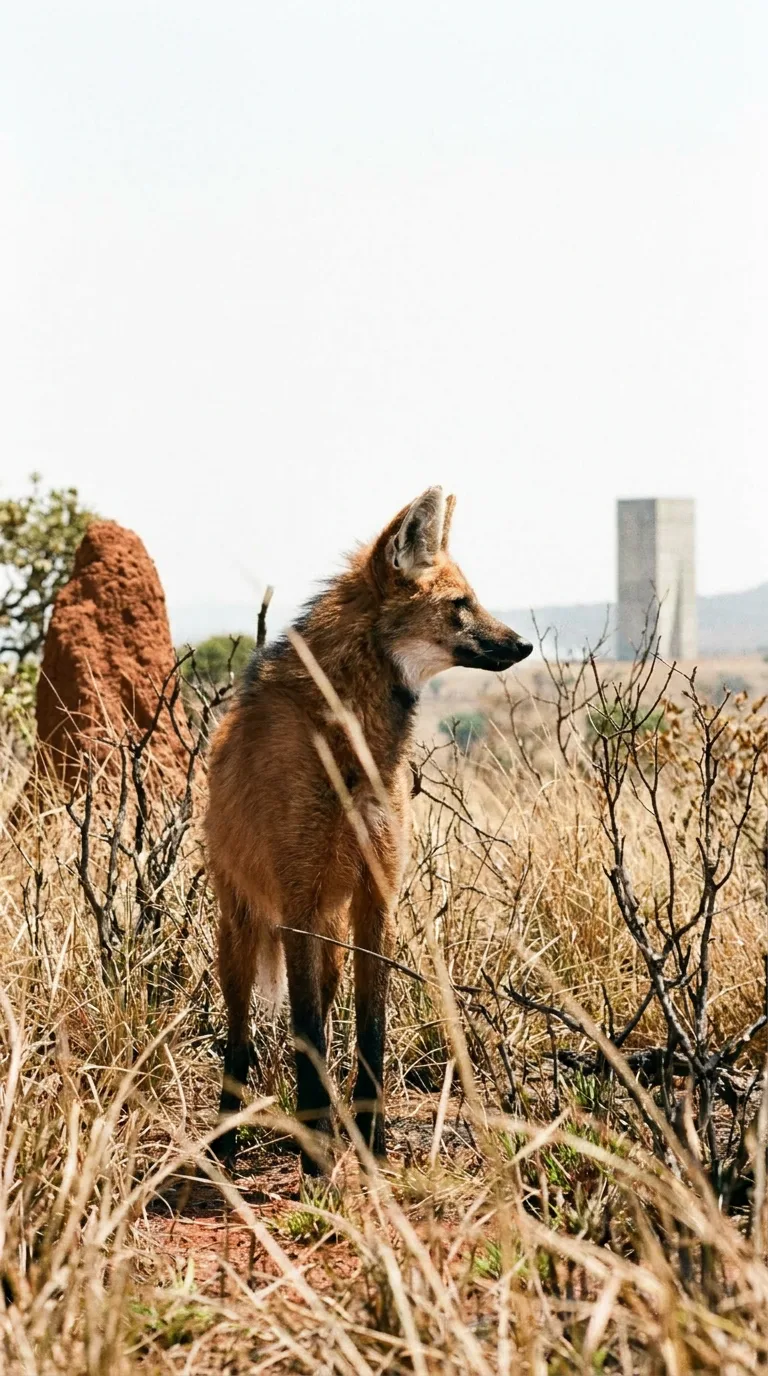
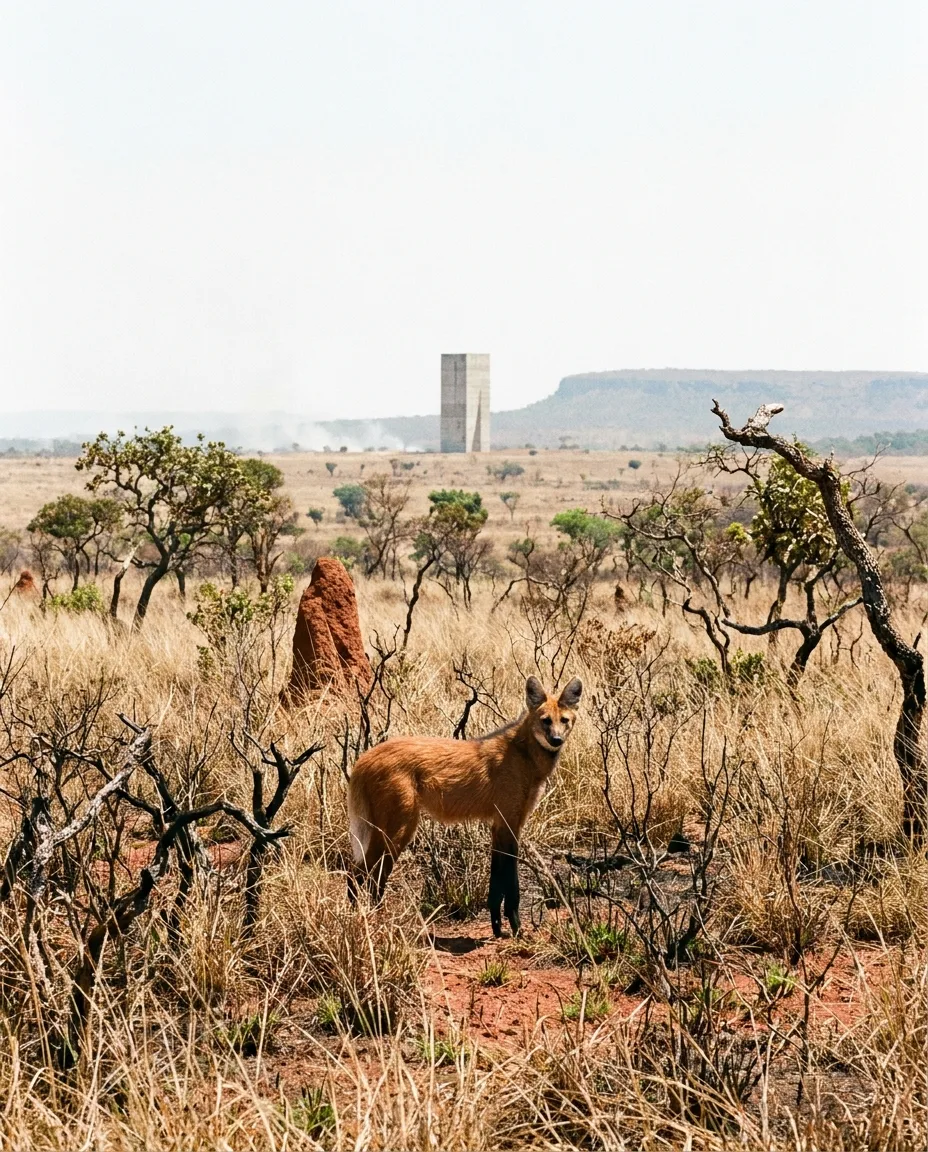
The lobo-guará is the animal of the cerrado, and it is not a wolf. It is not a fox either. It is the only living member of its genus, with no close relative anywhere: a red-coated animal in black stockings, standing on legs so long they look like a mistake. The legs are not a mistake. They are how it sees over grass taller than it is. It hunts alone, never in packs, and it moves at dusk.
Guará is also the scarlet ibis, the bird that turns red from what it eats. Short, hard, red, Brazilian without smelling of tourism. The animal and the name are the same object, which is why the symbol required no invention: a triangle from the flag, split from the ground up, and the split is the gap between the legs of the animal that crosses.
The correction
The obvious next move was to build an indigenous etymology around the name. Not doing it is the most important decision in the project.
The word guará comes from aguará guasu, roughly large fox, and that is Tupi-Guarani. Tupi-Guarani is the language family most people reach for when they want something to sound indigenous and Brazilian, because it is the one that leaked hardest into Portuguese. Thousands of everyday words and most of the place names a foreigner would recognise come from it. It is the convenient one.
It is also the wrong one for this ground. Tupi-Guarani belongs to the coast, the Amazon basin and the far south. The cerrado of northern Minas is Macro-Jê territory, a separate language family altogether, as distant from Tupi as Finnish is from French.
- XakriabáThe largest indigenous people in Minas Gerais, in the northern cerrado near the São Francisco river. Their language, Akwẽ, is Jê.
- KrenakOn the Rio Doce, in the east of the state. Their river was buried by mining tailings when a dam failed upstream in 2015.
- MaxakaliIn the north east of the state, and one of the few peoples in the region who still speak their own language as a daily language.
- PataxóIn the far south of Bahia and across the border into Minas, on the Atlantic forest side.
So building a Tupi mythology for a commercial label set in Jê country would mean borrowing the wrong people's language because it was the one within reach, and then inventing meanings inside it. That is not a small inaccuracy. It is a costume, and it is the fastest possible way to be taken apart by exactly the people whose respect the work needs.
What happens instead: the animal keeps its ordinary Portuguese name, because the animal is a fact of that ground and not a borrowed symbol, and the brand is rooted in matter rather than in language. Iron, red dirt, the triangle, the light at noon. Nothing in GUARÁ claims an indigenous origin, because it does not have one.
No model raises this. It is not in the prompt, and an objection like it does not surface on its own, because refusing an available association is not something a system optimising for a good answer does. This is the part of the work that is actually the work.
03The architecture is the animal
The wolf is a small body carried high on absurd legs. That is the structural rule of the entire collection.
It is not a decorative fact about the mascot. Everything in GUARÁ is held away from the body, on structure, so that air can pass. In this brand the function is always the same: let the air in.
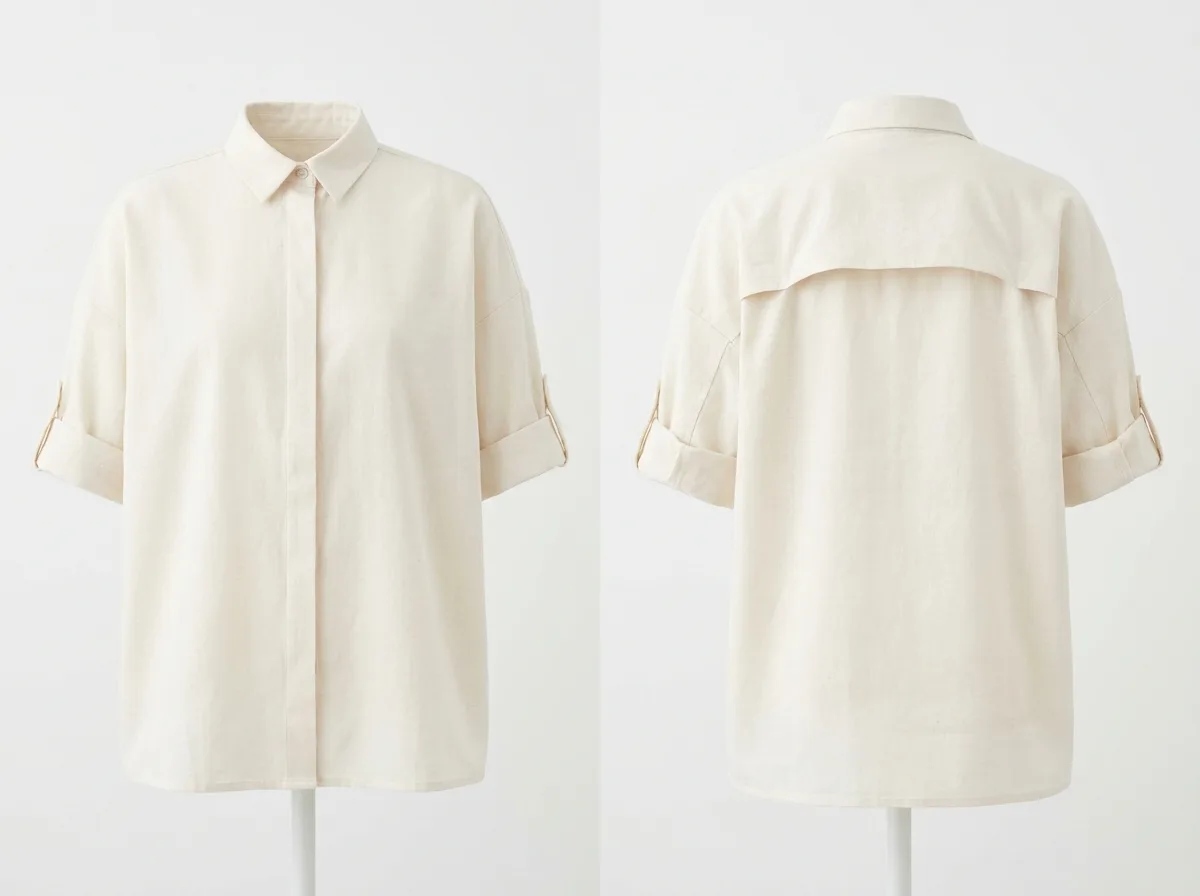
- ShirtThe back yoke is a baffle, standing off the spine to open an air channel between cloth and skin.
- OvershirtThe collar rises and stands off the head, throwing shade on the face instead of touching it and cooking.
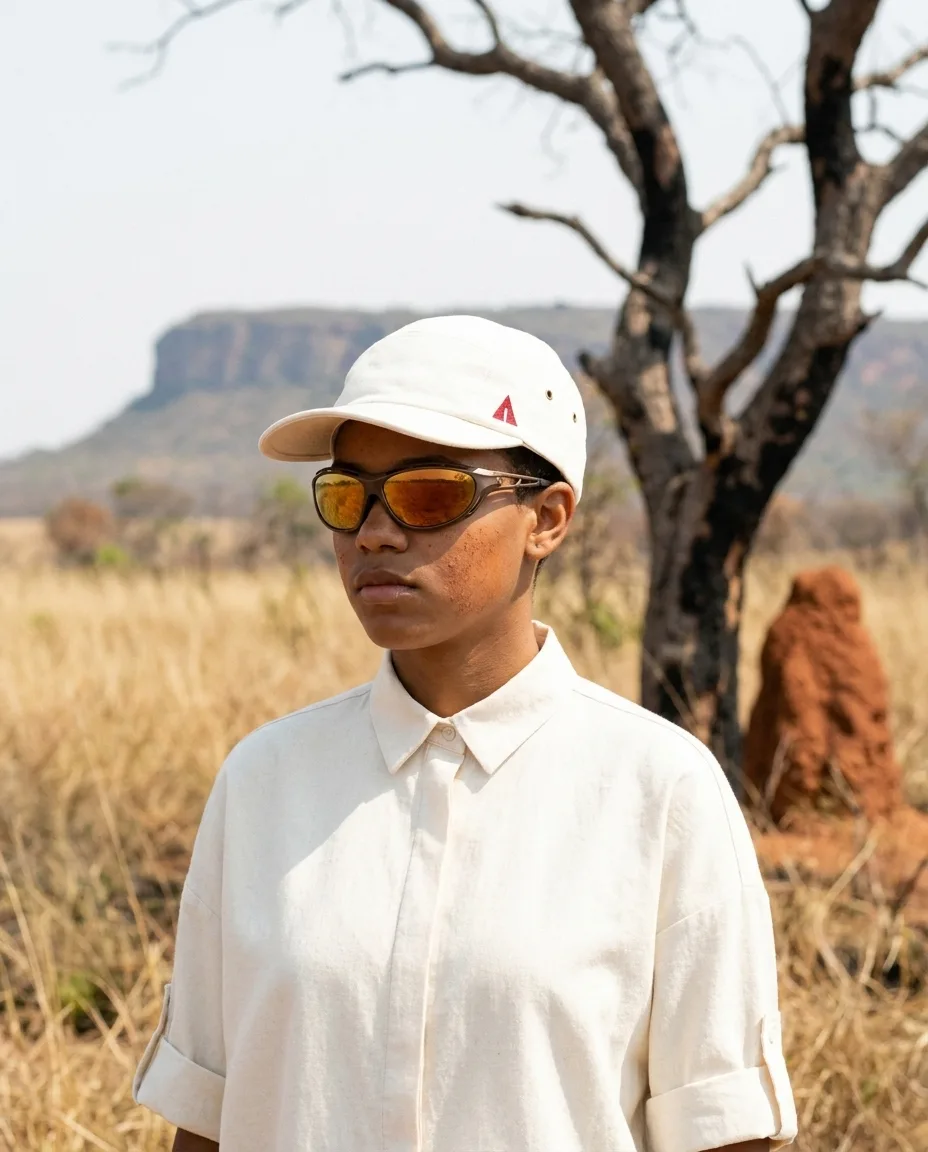
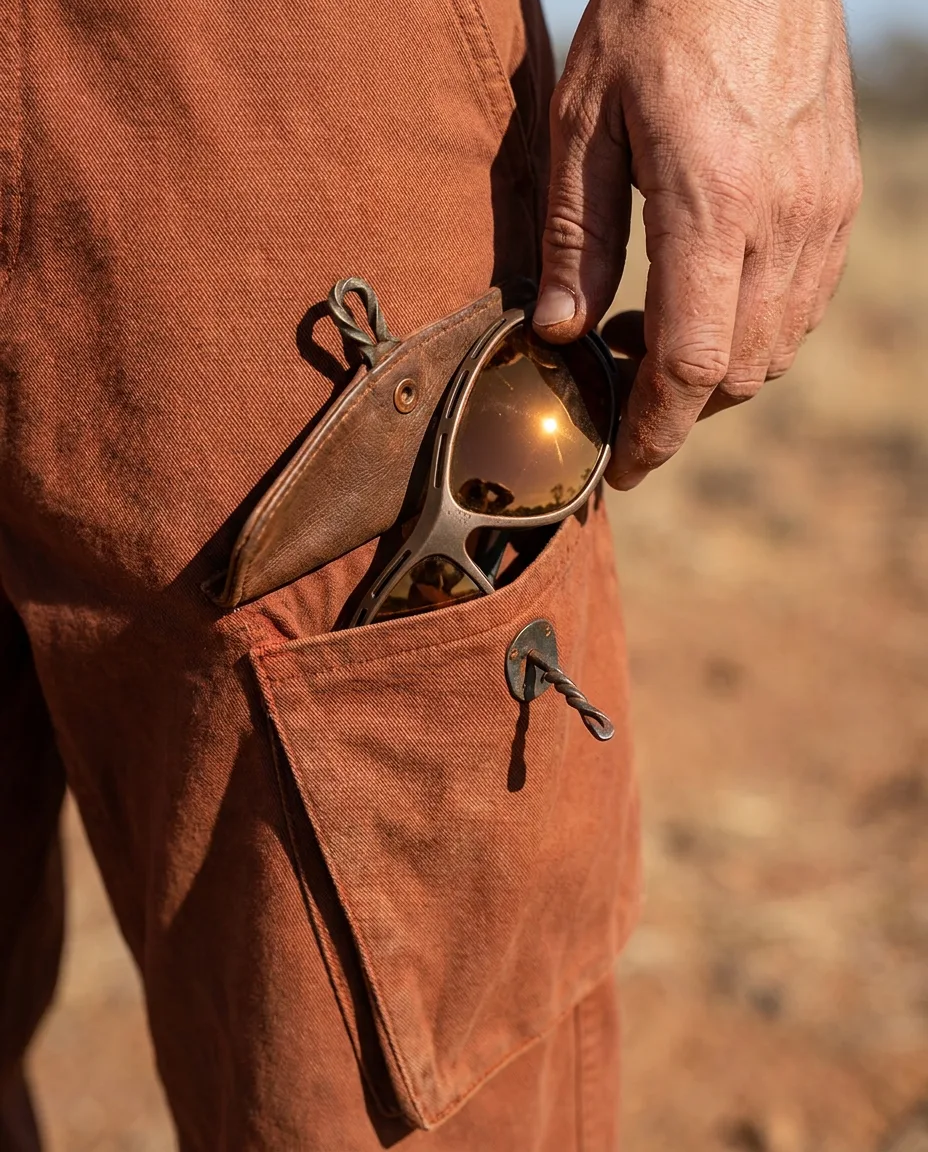
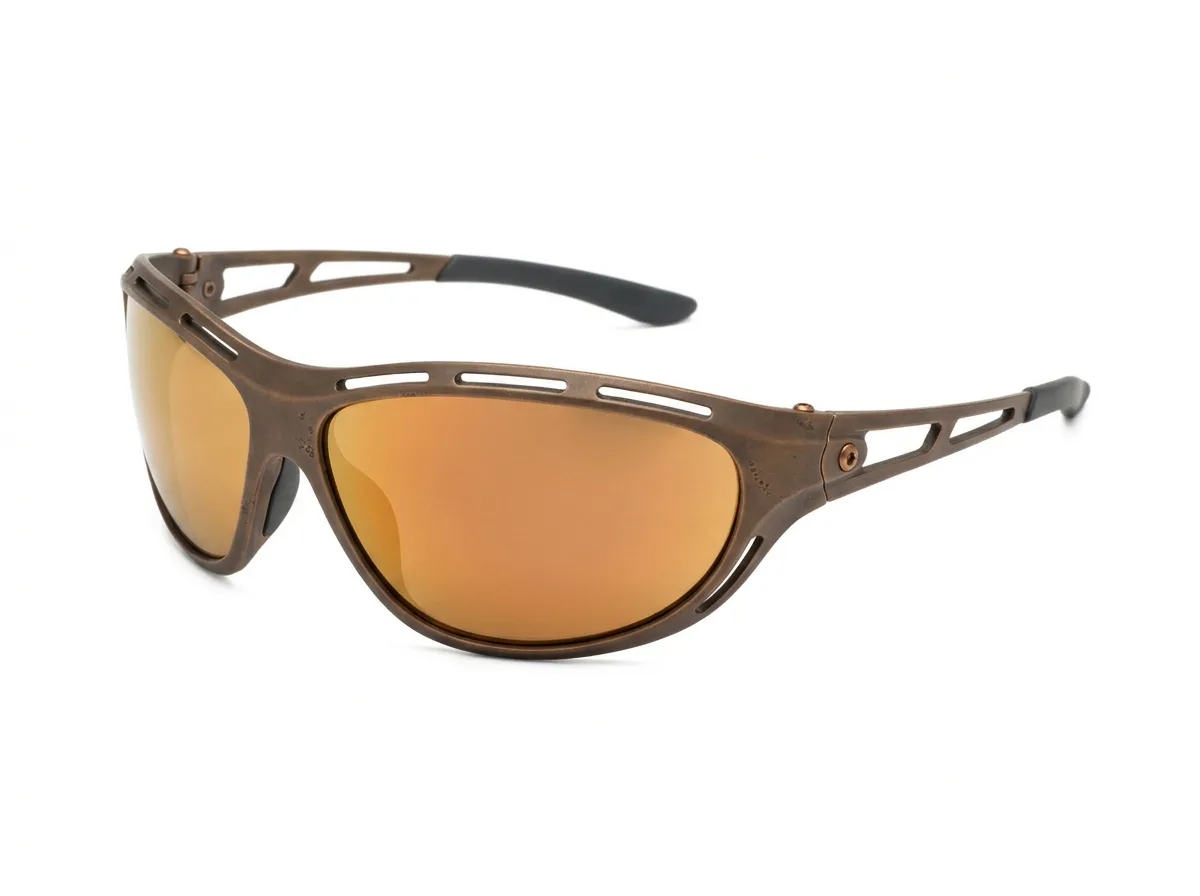
- GlassesThe arm leaves the frame on an extended neck, a thin stalk that holds the lens off the temple so heat escapes.
You see a white button shirt. It is ventilating you.
04The laws
If you would not wear it at 38 degrees, all day, without suffering, it is not GUARÁ.
That is the law above all the others. A beautiful piece nobody can stand to wear is not design, it is a prop. And the body registers weight and heat before the eye gets to judge the form, so a garment that looks heavy produces unease, and unease becomes aversion. The brand would die there, and die looking expensive.
Which gives the rule underneath it: old material in the look, never in the weight. GUARÁ looks like oxidised iron, dry leather and bone. It does not weigh like them.
- LightNoon. Hard, vertical, no mercy. Short black shadow, because shade is a luxury on that ground.
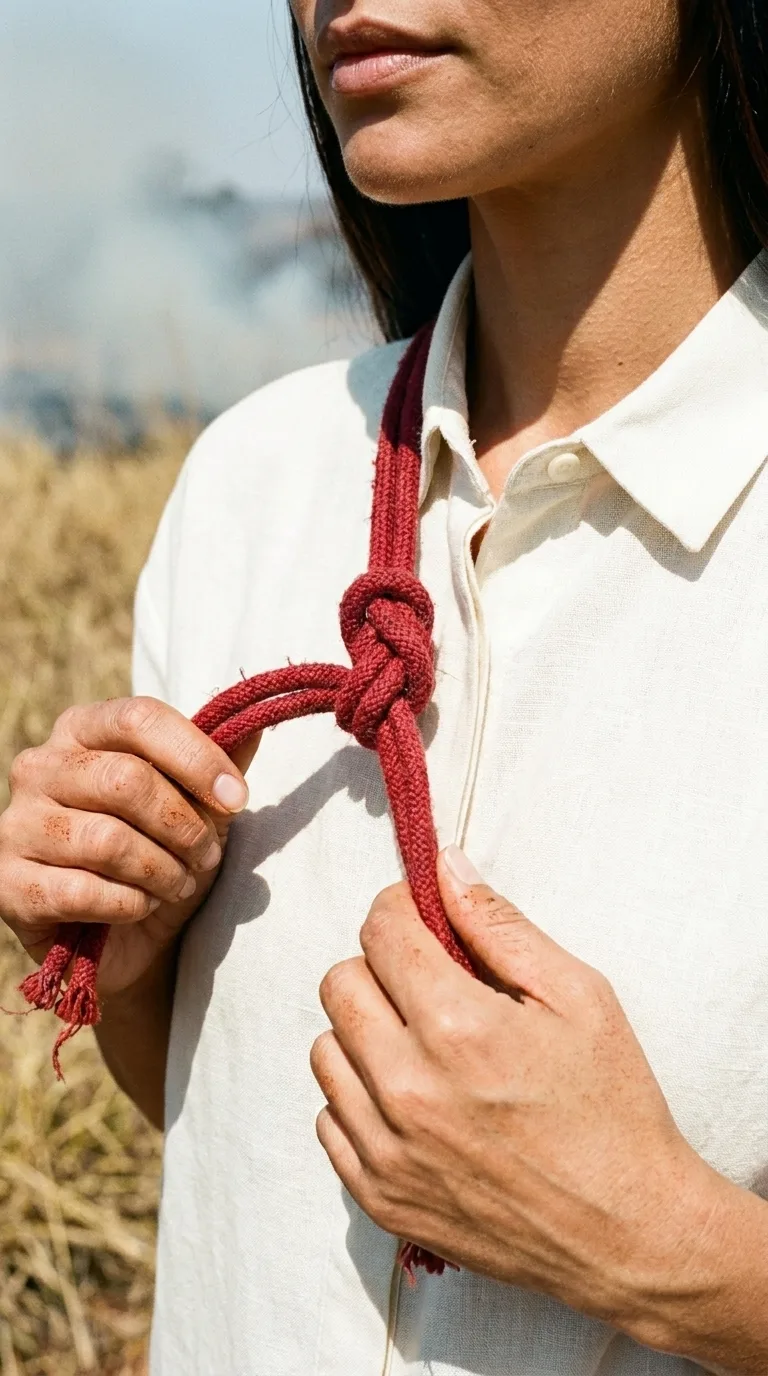
- BloodAppears once on the body and never twice. It is a cord, a knot, a stitch. It is never a garment colour.
- LensAmber, never grey. Grey is the factory default, and grey is what my own studio is made of.
- ForbiddenChrome, neon, blue, mist, grey, cold. Which is very nearly the whole Kaion palette.
- NeverA star. A red five pointed star in Brazil is not one possible reading, it is the reading, and it would hijack the brand.
The amber rule pays off twice. Amber is literally what the eye sees at noon through iron oxide dust. And nobody can take a photograph wearing GUARÁ glasses without the photograph coming out GUARÁ. The brand hijacks the vision of whoever wears it, which beats a logo, because a logo comes off.
05The product system
Every brand that lasts has two halves. Pretend you have one and you become either a museum or a shop.
- AparatoWhat gets looked at. It carries the thesis, makes the film and stops the feed. Almost nobody buys it.
- NúcleoWhat gets worn. It pays the bills. Almost everybody buys it.
The rule that stops this becoming two separate brands: every NÚCLEO piece carries exactly one gene from the APARATO. Not a white shirt with a GUARÁ label sewn in. The standing collar of the editorial shell, translated for somebody who has to work in the morning.
Every pocket has a name and an owner
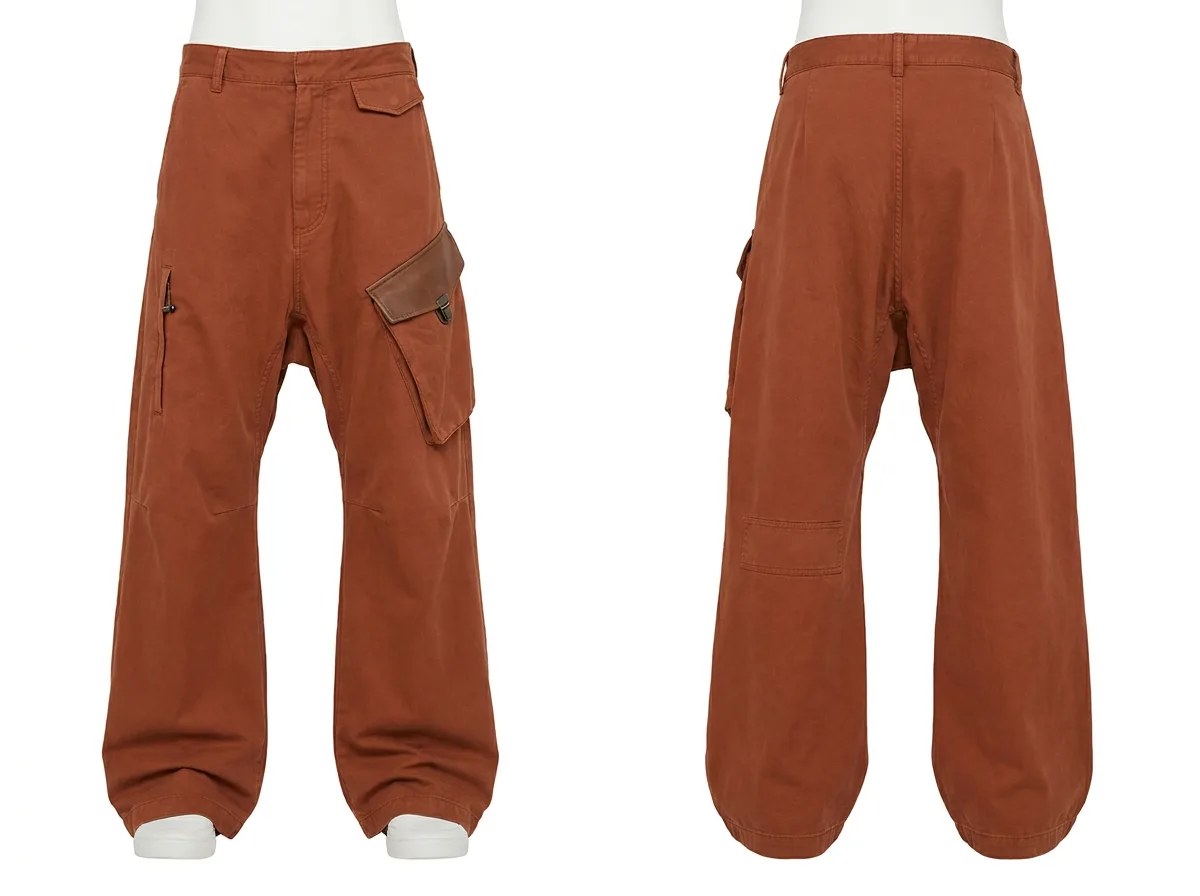
A pocket without a named function does not enter the garment. Carhartt has a hammer loop because somebody carries a hammer. Generic cargo is cosplay of work: six identical pockets, none of them thought about, nothing inside any of them.
| Where | For what | |
|---|---|---|
| O ESTOJO | Right thigh, outer | The glasses. Rigid angled sheath, dry leather flap, iron catch, padded floor. It is the pocket that proves the pieces were designed together. |
| O FUMO | Waistband, front right | Tobacco and papers, the lighter, the key. Small and vertical, mouth angled to reach sitting down. You open it without looking. |
| A LÂMINA | Left thigh | The phone. Vertical and deep against the leg, because a pocket lying flat empties itself when you crouch. |
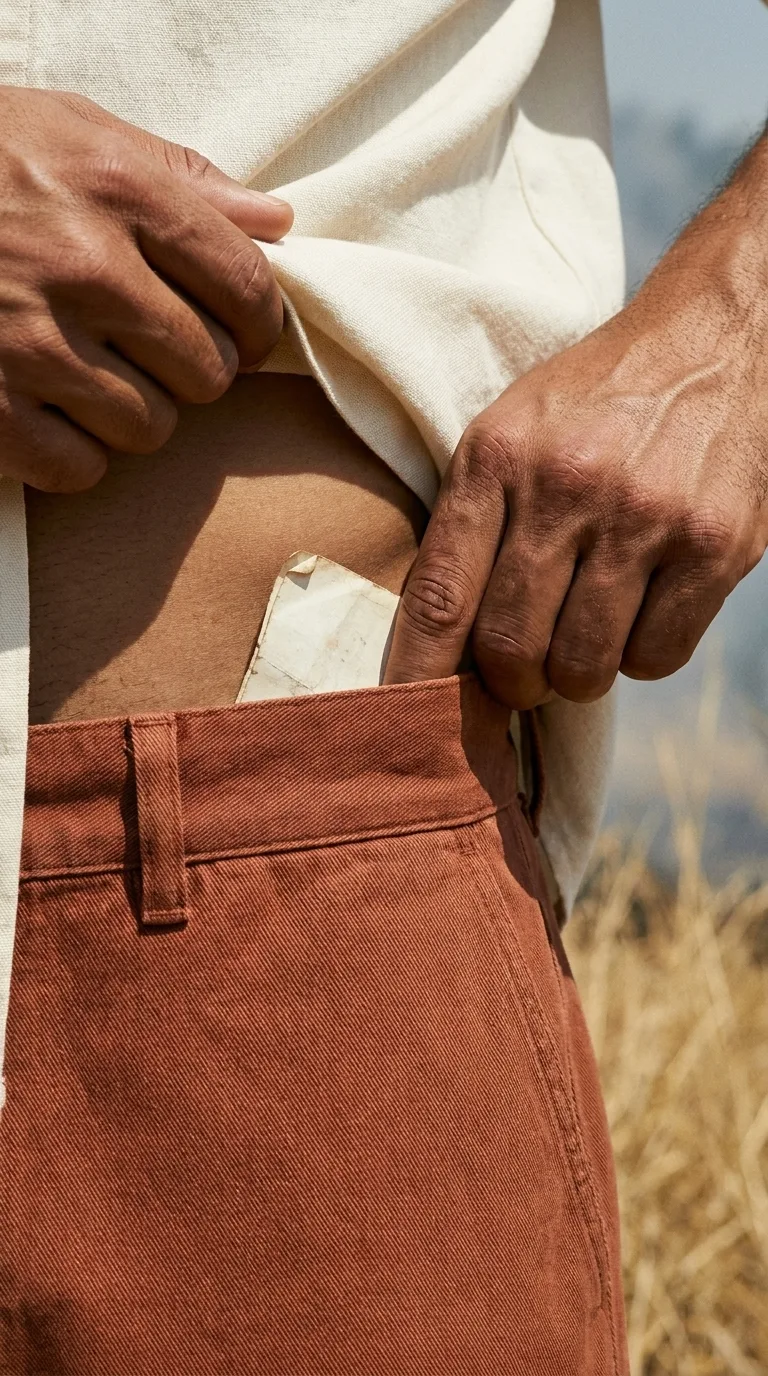
| O CEGO | Inside the waistband | Money, documents, whatever condemns you. No visible seam outside. Whoever wears it finds it alone and tells somebody. |
And this is what techwear never has: a motive.
Every secret pocket in Japanese streetwear is ornamental, because nobody wearing it is hiding anything. Here somebody is. The blind compartment exists because what you carry condemns you. That is the Inconfidência doing structural work rather than supplying a mood.
The muleteer was already technical apparel. He crossed the range with a modular load system, layers for the cold of the small hours and the noon sun, hardware that lasted a decade and leather you repaired on the road. Nobody needed to invent techwear in Minas. They just stopped making it.
06Written down
A preference lives in your head and drifts by Thursday. A law can be handed to somebody else.
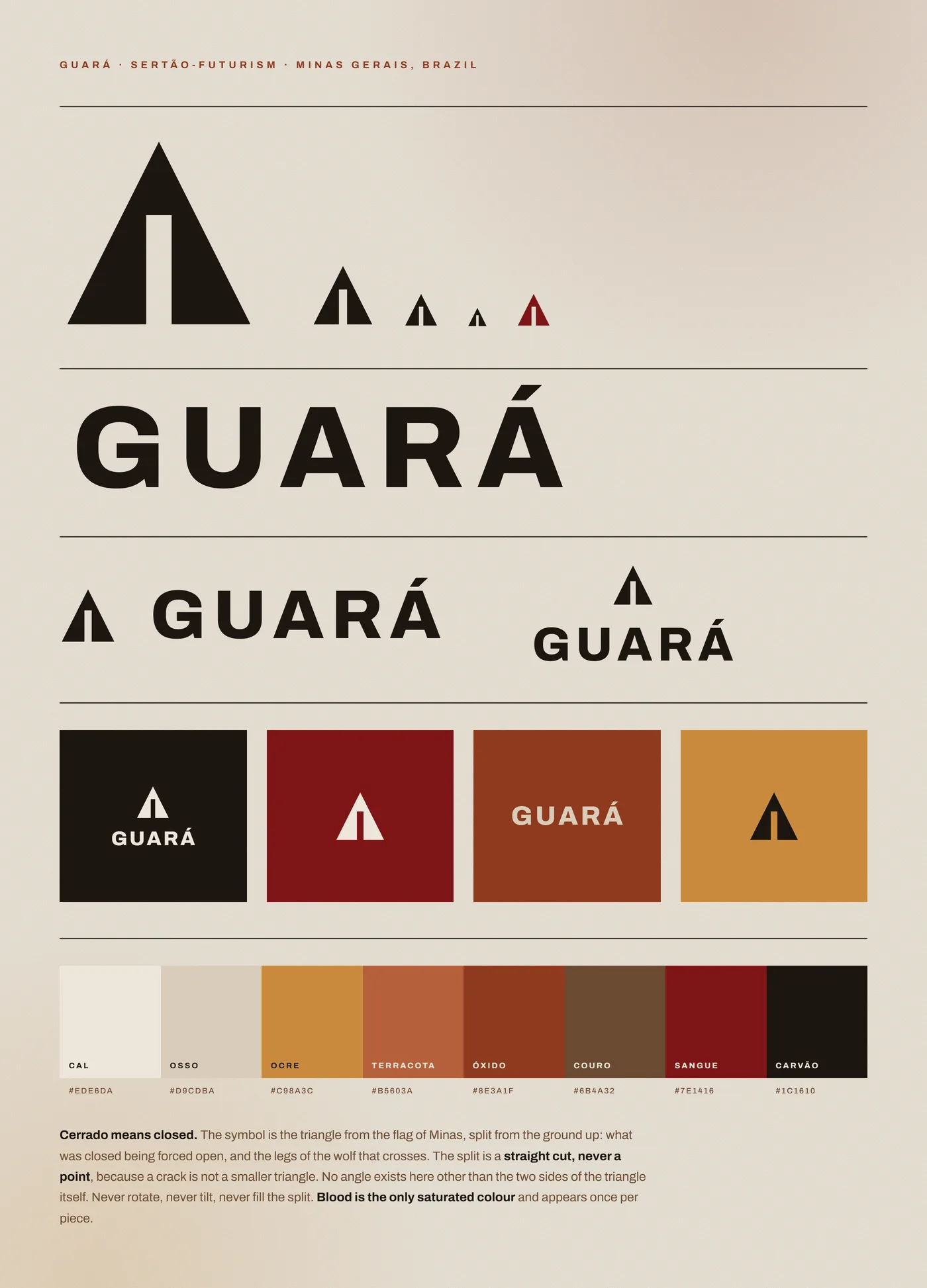
So the rules were written into the identity sheet itself, not kept as taste. The mark is the triangle from the flag of Minas, split from the ground up: what was closed being forced open, and the legs of the wolf that crosses. The split is a straight cut and never a point, because a crack is not a smaller triangle.
07Asset before prompt
Every shot that worked first time had the garment, the person and the place locked before the video prompt ran.
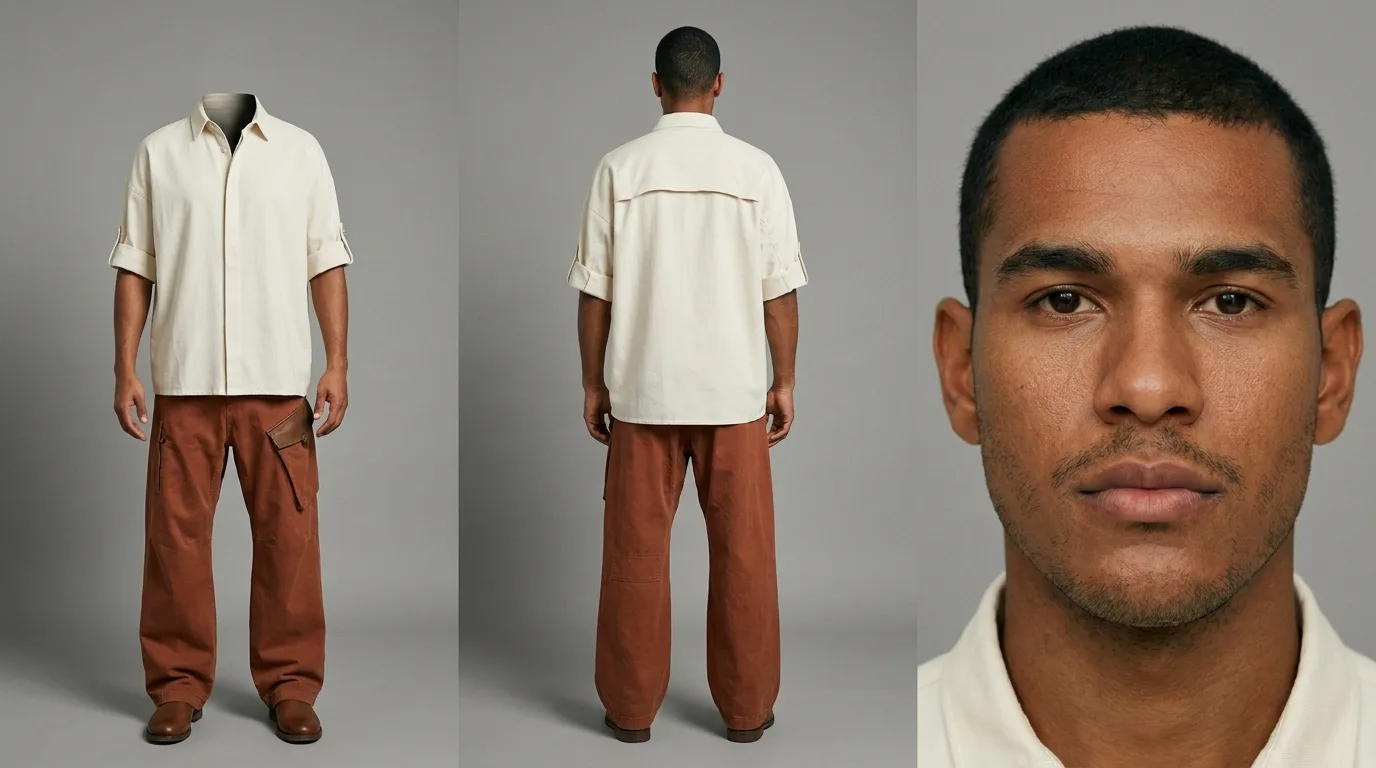
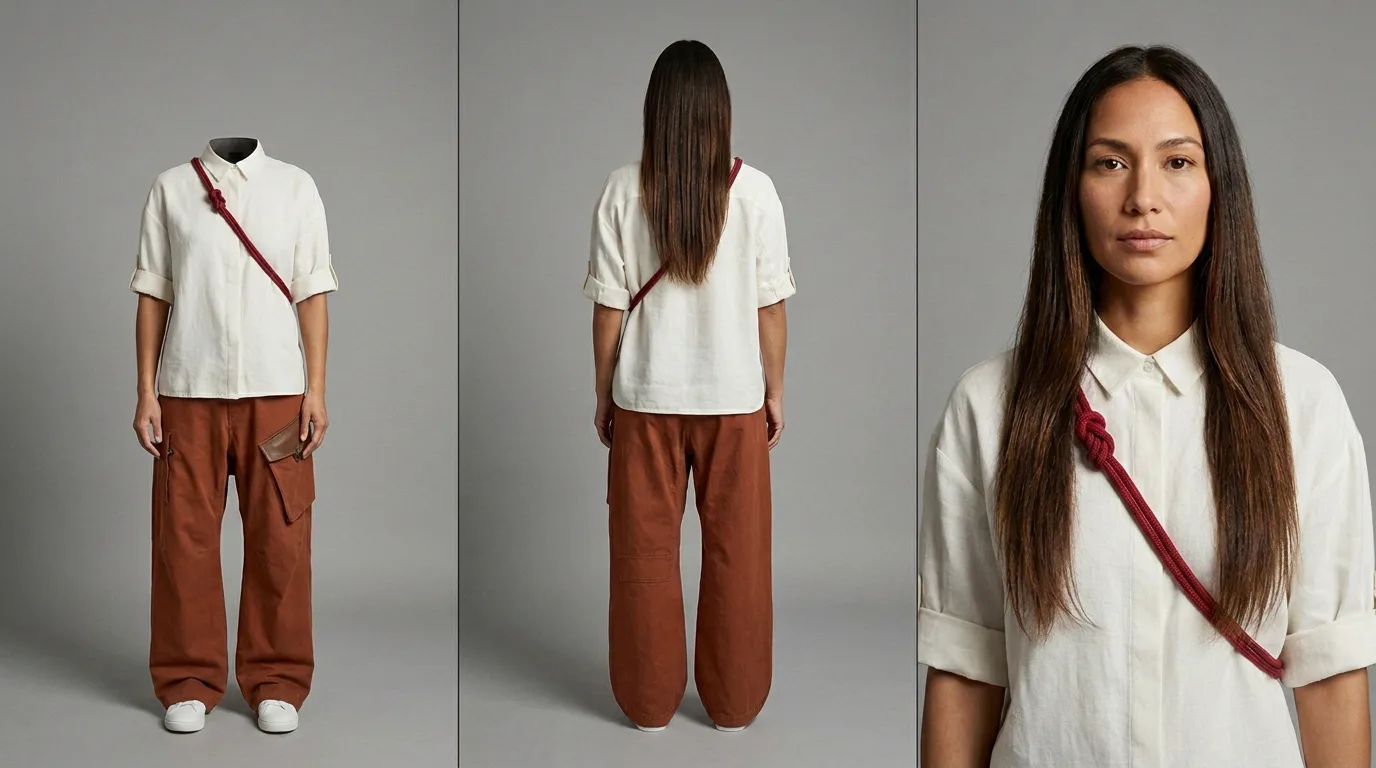
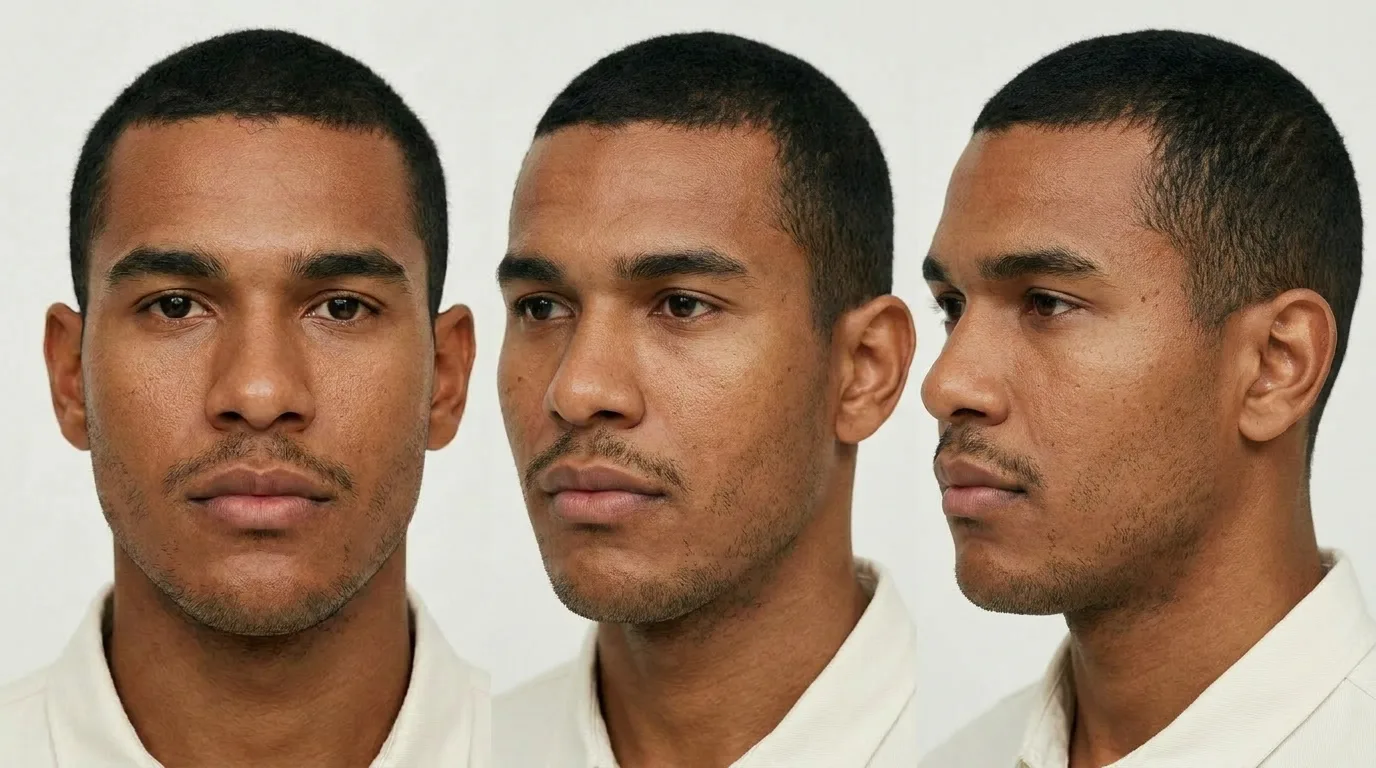
Every shot that took six attempts had skipped one of those steps. Every time, without exception. So each character was locked before any film prompt ran, and locked in pieces rather than as a whole person: two sheets for the body, photographed headless so the garment and the silhouette hold on their own, and a separate sheet for the face at three angles.
The headless panel is not a stylistic choice, and the reason is worth stating precisely. A reference sheet is one image with a fixed pixel budget, split between its panels. Put a full body with a forty pixel head next to a close portrait, and you have handed the model a second, much worse copy of the same face. It averages the two, and that average is where drift comes from. Remove the small head and the sheet contains exactly one face, so there is nothing to average against.
Nothing was made by hand twice.
08What did not work
Three things in this project are wrong, and they are written into the source files rather than quietly cropped out.
- GlassesThe plate does not meet its own written spec. The entry calls for the wolf's leg: a wire-thin arm, too long for the lens, breaking at an angular knee. What rendered is a conventional wraparound. The film was already cut against it, so regenerating the plate would orphan the shot. The rule that came out of it is that no future frame may close in on the arm.
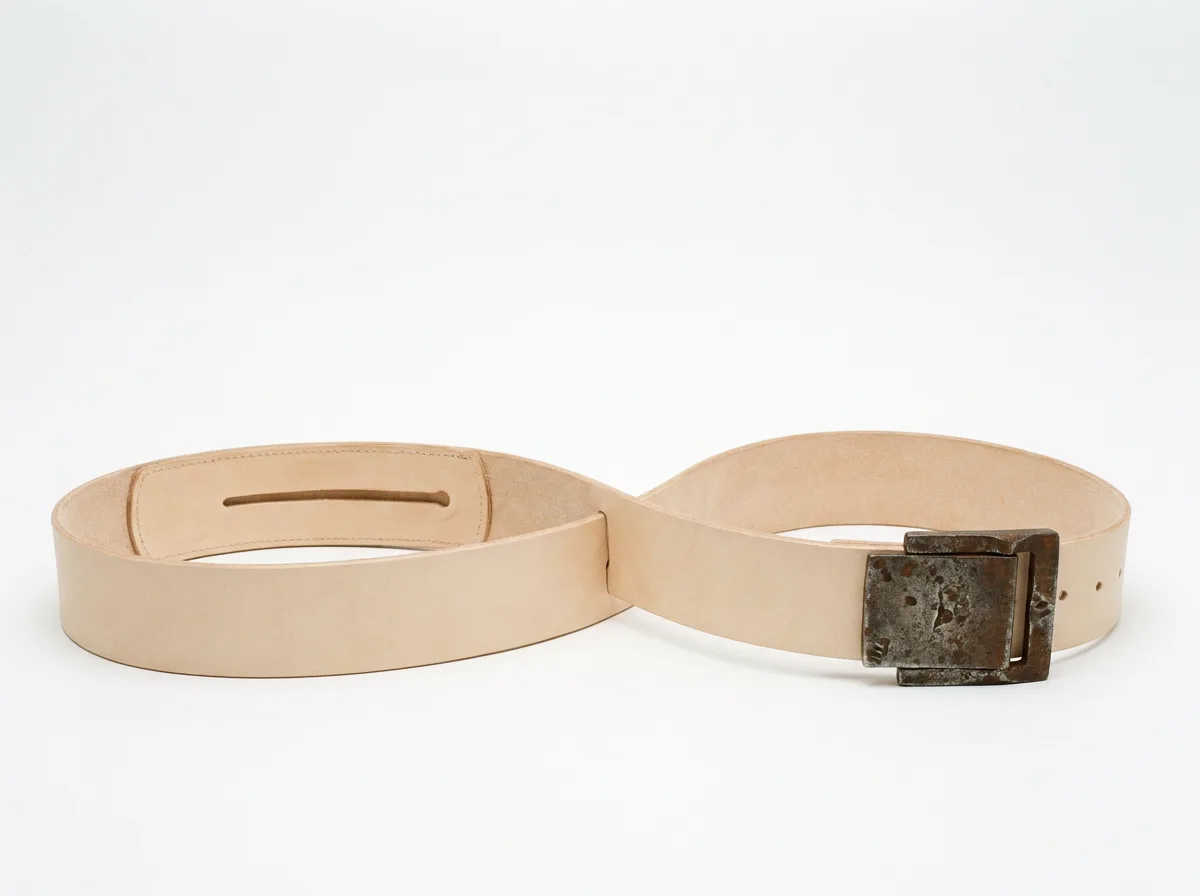
- Belt buckleIt has no design yet. Oxidised iron on a buckle reads as period costume, which the brand explicitly forbids. The plate is usable for the leather and the blind compartment, and not for the buckle.
- The blind pocketIts position is still open. In the back waistband it is unfilmable: hand behind the back, under a lifted shirt, it reads as adjusting underwear. Three attempts confirmed it before the position was reopened.
A case study that only shows what worked is an advertisement. The judgment is visible in what got rejected, which is why the rejections are the part worth publishing.
09The cost
Seven hours and US$ 15.71, concept to finished film. Errors and learning included.
Which is the entire argument, stated as a number. The production was very nearly free. The seven hours were not spent rendering, they were spent deciding, and deciding is the part that does not get cheaper when the model gets better.
The machine costs less than lunch and everyone has one. It will never tell you the dirt is red because of iron.